0%

Choosing an Aluminium Washroom Door supplier is about more than comparing prices. Buyers need doors that handle frequent use, moisture, cleaning routines, and varied project conditions. A weak frame or poorly matched hinge can become a daily frustration. The small details matter: edge finish, lock alignment, panel thickness, and how smoothly the door closes.

For this introduction, a fictional composite specification consultant, Alex Morgan, offers a practical reminder: “A dependable door is a system: panel, frame, hardware, and installation must work together.” Treat that as guidance, not a verified quotation from a real industry professional. Ask suppliers for clear product specifications, material details, warranty terms, customization options, and realistic production schedules. Photos help, but samples and written technical information tell you more.

This guide presents 10 suppliers for global buyers, with attention to product range, manufacturing capability, communication, and export experience. Compare how each supplier handles custom sizes, finish consistency, packaging, and after-sales support. A polished catalogue is not proof of dependable delivery. Check the details.

No shortlist is perfect. Project requirements differ, and supplier information can change. Use these profiles as a starting point, then confirm current specifications and service terms directly with each company. A door may look simple. The right choice often depends on what happens after installation.
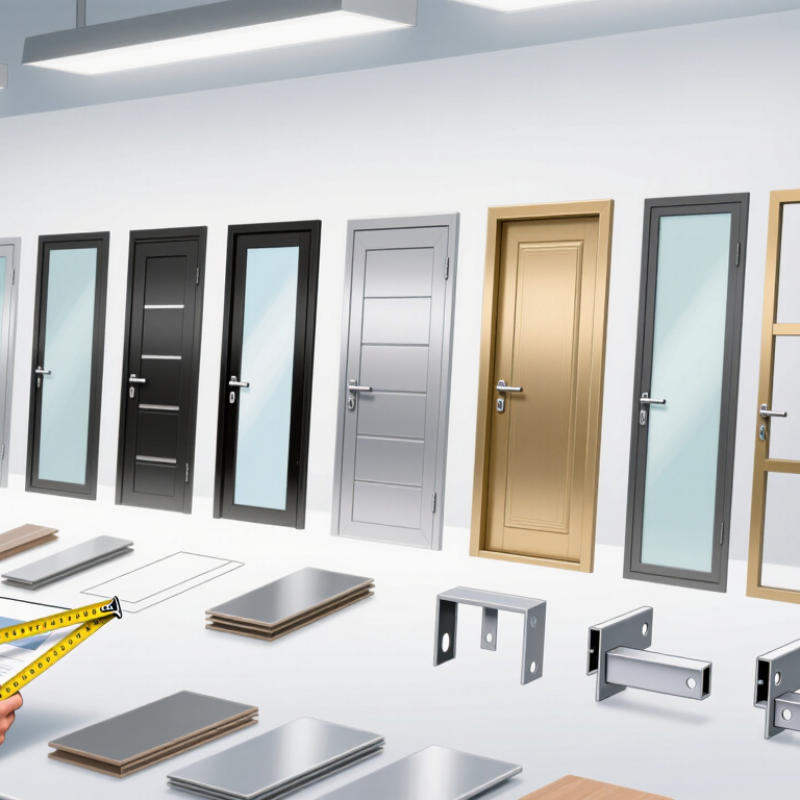
10 Best Aluminium Washroom Door Suppliers for Global Buyers

What Aluminium Washroom Doors Are and Where They Are Used

An aluminium washroom door usually has an aluminium frame with a solid or composite infill panel. The frame resists moisture better than many untreated metals, while the panel provides privacy and impact protection. These doors are used in offices, hotels, schools, hospitals, shopping centres, and apartment buildings. In busy facilities, details matter: a smooth edge, secure hinges, and a latch that works with one hand. Aluminium does not make every door equally durable; panel quality, fittings, installation, and maintenance all affect performance.

The World Health Organization’s 2022 Global Report on Health Equity for Persons with Disabilities estimates that 1.3 billion people experience significant disability. That figure underlines why washroom doors should be easy to approach, operate, and identify—not merely attractive. Clear opening width, handle position, visual contrast, and the swing path deserve attention. Local accessibility requirements differ, so buyers should verify the applicable standards before ordering. One trade-off is easy to overlook: a lightweight door may feel less substantial unless its frame and hardware are properly specified.

Tips: Ask for material and finish details, test a sample latch, and check cleaning instructions. The International Aluminium Institute reports that about 75% of all aluminium ever produced remains in use. Recycled content can be useful information, but it does not replace checks on corrosion resistance, privacy, or service support. A small site measurement error can still cause a frustrating fit.

10 Best Aluminium Washroom Door Suppliers for Global Buyers

What Aluminium Washroom Doors Are and Where They Are Used

Aluminium washroom doors are door sets made with aluminium frames and, depending on the design, aluminium or other infill panels. Their relatively low material density helps explain why aluminium is widely used for lightweight door and frame systems in commercial washrooms, offices, schools, and public facilities.

Approximate material density comparison. Values are in g/cm³; actual densities vary by alloy and grade. Density alone does not determine the weight or performance of a finished door.

How to Evaluate Suppliers for Quality, Compliance, and Global Delivery

A credible aluminium washroom door supplier should provide more than a polished catalogue. Ask for the alloy and profile specifications, finish details, hardware schedule, and inspection records for recent production batches. Request coating test results and confirm the test method, such as ISO 9227 for salt-spray testing, where relevant to the project. Small details matter. Check that drawings, samples, and delivered doors match, including frame depth, hinge positions, and lock operation.

Compliance depends on the destination and building type. Ask suppliers to identify which product documents, test reports, and declarations apply to your project, rather than accepting a generic “internationally compliant” claim. The World Bank’s 2023 Logistics Performance Index assessed 139 economies across six dimensions, including customs, tracking, and timeliness. Use those same practical questions when checking a supplier’s export process: who prepares documents, how shipments are tracked, and what happens when schedules slip? A neat certificate file is useful, but it cannot replace clear answers.

Delivery protection deserves close review. UNCTAD’s Review of Maritime Transport 2024 reports that shipping carries over 80% of world trade by volume. Ask for a packing specification showing corner protection, moisture control, and how frames and panels are secured inside containers. Request photos of packed orders and a written process for reporting transit damage. Not always. I would also check spare-hardware availability and replacement lead times; this is easy to overlook when comparing quotes, and it can matter after installation.

Profiles of Ten Aluminium Washroom Door Suppliers

The first supplier profile is a project fabricator offering standard aluminium frames and compact laminate panels. Buyers should request corner samples and inspect edge finishing.

The second focuses on made-to-measure doors, useful for older buildings with uneven openings. Confirm how it handles measurement errors.

The third specializes in washroom environments, with corrosion-resistant hardware and easy-clean surfaces. Ask for material specifications, not just the phrase “waterproof.”

The fourth profile serves large projects and may offer consistent production batches. Check lead times against a sample order.

The fifth accepts smaller orders, which can suit regional contractors, though its finish options may be limited.

The sixth produces aluminium sections in-house, giving buyers more control over frame dimensions. Verify tolerances.

The seventh offers a broad hardware selection, including hinges, locks, and indicator bolts. Test whether replacement parts remain available after installation.

The eighth supplies modular cubicle systems designed for faster assembly. Request clear installation drawings.

The ninth documents recycled-content options, but supporting records matter more than a sustainability claim.

The tenth provides export packing and shipment coordination. Ask for crate dimensions and packing photographs; transit damage is easy to underestimate.

These profiles are not guarantees of quality. Compare door samples, written specifications, warranty terms, and references from similar projects before placing an order.

How the Suppliers Compare by Product Range and Market Coverage

For global buyers, aluminium washroom door suppliers differ less by material choice than by how much of the project they can support. Some offer only standard cubicle doors, frames, and basic hardware. Others provide matching partitions, privacy locks, hinges, ventilation details, and several surface finishes. A broader catalogue can simplify coordination, but it may also include options that are difficult to source consistently. Details matter.

Market coverage is another practical measure. Suppliers serving multiple regions may have experience with varied door sizes, packaging needs, and shipping schedules. However, a wide export map does not guarantee reliable delivery to every destination. Ask for recent references in your target market, typical lead times, and confirmation that replacement hardware can be supplied later. Small parts can delay a finished washroom.

Compare technical information, not just catalogue pages. Check stated panel thickness, frame dimensions, finish samples, and available custom sizing. Request drawings before production, especially when the doors must fit existing partitions or uneven site openings. Supplier data can be incomplete, and product descriptions sometimes sound more precise than they are. It is reasonable to ask for clarification. A supplier with fewer models may still be a better fit if its stock, communication, and regional support match the project.

What Global Buyers Should Check Before Placing an Order

Before ordering an aluminium washroom door, request a drawing with exact opening dimensions, frame depth, panel thickness, and swing direction. A few millimetres can matter on site. Ask what aluminium alloy and surface finish are used, and whether the finish has been tested for humid, frequently cleaned spaces. Request test details, not just a claim that the door is “water-resistant.”

Check the hardware as carefully as the panel. Hinges, locks, and handles face repeated use and moisture; ask for their material, load rating, and replacement availability. A sample can reveal rough edges, uneven coating, or a flimsy feel that photographs hide. Still, one sample may not represent every production batch. Agree in writing how quality will be checked before shipment.

Confirm lead time, minimum order quantity, packing method, and who handles damage claims. Ask for photos of protective corner guards and packed doors, especially for long-distance freight. Verify that the supplier can provide installation guidance and clear product documents for your project. Get answers in writing. That sounds obvious, but rushed emails leave gaps. Compare the quoted specification line by line, not only the final price. A cheaper door may need extra hardware or site adjustments. I would not assume the first drawing is perfect; have your installer review it before production begins.

10 Best Aluminium Washroom Door Suppliers for Global Buyers - What Global Buyers Should Check Before Placing an Order

No. Supplier Check What to Verify Useful Evidence or Questions
1 Product fit and intended use Confirm the door is designed for the project’s location and use, such as toilet cubicles, public washrooms, or changing areas. Check opening direction, privacy needs, and traffic level. Request drawings showing the door, frame, hardware, clearances, and proposed installation details.
2 Aluminium specification Ask for the alloy and temper, profile dimensions, and material thickness. Suitability depends on the complete door design and application, not the word “aluminium” alone. Request a bill of materials and technical datasheets; compare them with the project specification.
3 Finish and corrosion suitability Specify the finish, colour, and surface preparation, and check suitability for humidity, cleaning chemicals, and any coastal exposure relevant to the site. Ask for finish specifications, care instructions, warranty terms, and relevant test reports. Salt-spray results alone do not establish service life in every environment.
4 Dimensions and tolerances Confirm opening size, leaf size, frame dimensions, thickness, handing, and manufacturing tolerances before production. Verify whether measurements are finished-opening or rough-opening dimensions. Approve dimensioned shop drawings and a written measurement schedule for every door type.
5 Hardware and privacy Check hinges, locks or indicators, handles, closers, emergency release, and accessibility requirements. Ensure hardware materials and finishes suit the washroom environment. Request a hardware schedule, product data, replacement-part availability, and confirmation of the emergency-release arrangement.
6 Performance claims and testing Match each claimed performance to the exact door configuration and the project’s local requirements. A test or certification for one assembly may not apply to another size, hardware set, or installation. Request reports identifying the tested product, configuration, test method, issuing laboratory, and report date. Verify applicability with the project consultant or authority where needed.
7 Quality control and traceability Understand how the supplier checks dimensions, finish consistency, assembly, and hardware operation, and how nonconforming items are handled. Ask for inspection records, sample quality documents, batch identification practices, and the proposed pre-shipment inspection process.
8 Packaging and shipment protection Check how doors, frames, and hardware are protected against scratching, impact, moisture, and movement during the planned transport route. Request packaging details, loading photos or records, package labels, and confirmation of the agreed shipping terms and responsibilities.
9 Lead time and order capacity Confirm production and delivery schedules, order quantities, colour or size limits, and how changes or delays are managed. Allow time for drawing approval and samples where required. Get a written production schedule with approval milestones, shipment dates, and a process for reporting schedule changes.
10 Warranty, installation, and after-sales support Review warranty coverage, exclusions, claim steps, installation responsibilities, and access to replacement hardware or technical assistance in the destination market. Request the written warranty, installation instructions, spare-parts list, and a named contact or defined support channel.

Buyer note: Use these checks to compare documented offers; the table is a purchasing checklist, not a ranked list or certification of individual suppliers.

FAQS

What dimensions should be confirmed before production?

Request a drawing with the opening size, frame depth, panel thickness, and swing direction. A few millimetres can affect installation.

How can I check whether a door suits humid washrooms?

Ask for the aluminium alloy, surface-finish details, and relevant test information. “Water-resistant” alone is not enough. Ask for proof.

What should I inspect on a sample?

Check edge finishing, coating consistency, hinges, locks, and handles. A sample can reveal rough edges that photos may hide.

Can one sample confirm the whole production batch?

Not necessarily. One sample may not represent every door. I would avoid assuming it does; agree on written quality checks before shipment.

Which hardware details matter most?

Ask about material, load rating, and replacement-part availability. Hinges and locks face frequent use, moisture, and repeated cleaning.

What should I confirm about delivery?

Check lead time, minimum order quantity, packing method, and responsibility for damage claims. Request packing photos. Photos help.

What can reduce the risk of freight damage?

Ask for crate dimensions and photos showing protective corner guards. Long doors can be damaged in transit more easily than expected.

How should I compare supplier quotations?

Compare specifications line by line, including finish, hardware, warranty, and installation documents. A lower price may mean extra site adjustments. Have the installer review the drawing; I might overlook something too.

Conclusion

This guide explains what an Aluminium Washroom Door is, the settings where it is commonly used, and the features that can make it suitable for commercial and public washrooms. It outlines practical ways to assess suppliers, including product quality, customization options, compliance documentation, manufacturing capacity, and ability to support international delivery.

The article also presents profiles of ten suppliers and compares their product ranges and market coverage to help buyers identify options that fit their project needs. Before placing an order, global buyers should confirm dimensions, materials, finishes, hardware, lead times, packaging, shipping arrangements, and after-sales support. A clear review of these details can help reduce misunderstandings and make supplier selection more informed.

Olivia

Olivia

Olivia is a professional marketing specialist with a strong understanding of the company’s products and the needs they are designed to meet. She combines product knowledge with clear, practical communication, helping readers understand key features, everyday applications, and the value each......