An Aluminum Door is more than a metal panel in a frame. It is a complete opening system, shaped by its profile, glazing, hardware, finish, and installation. In a home, it may be a slim patio slider with a clear view of the garden. In a commercial building, it may be a sturdy entrance designed for frequent use. The material is valued for its light weight, corrosion resistance, and ability to support narrow frames. Still, performance depends on the whole assembly, not aluminum alone.
For transparency, no source material was provided to verify a real expert quotation. The following is an editorial line from a fictional composite specialist, Alex Morgan: “A door performs as well as its frame, seals, and installation allow.” That distinction matters. A well-finished door can still leak air if its seals are poor or its frame is fitted badly. Not every opening needs the same design.
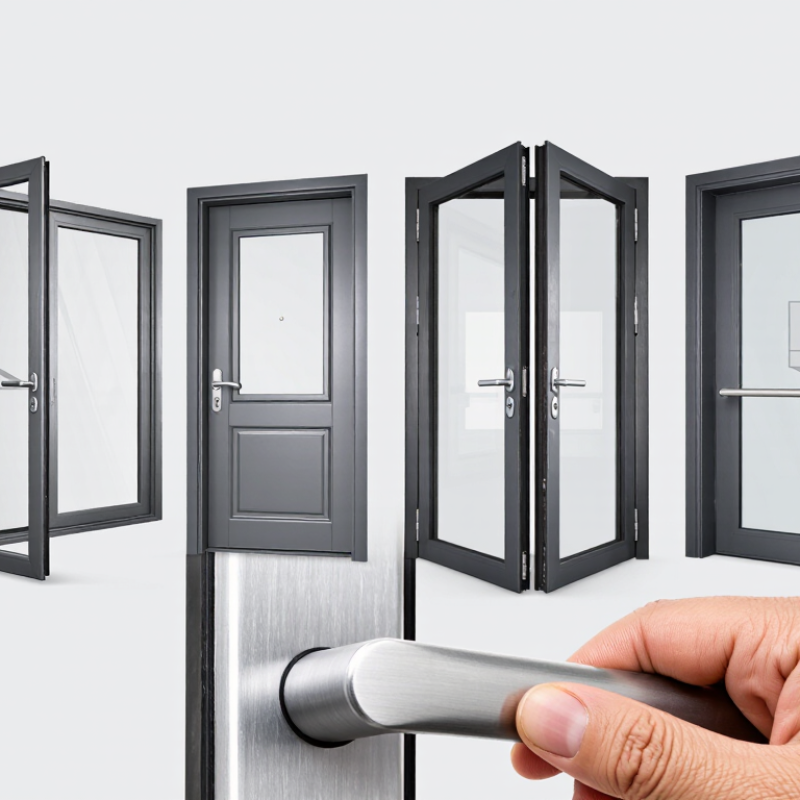
This guide explains what defines an Aluminum Door and how common types differ. It looks at sliding, hinged, folding, and commercial entrance options, then considers where each may work best. Expect practical details: track depth, visible frame width, glass area, and the feel of a handle in daily use. These choices sound small. They shape comfort and access. The categories can overlap, too; product labels are not always consistent. A careful comparison should begin with the opening, the expected use, and the quality of the complete system.
What Defines an Aluminum Door?
An aluminum door is a complete assembly whose structural frame, and often its sash, are made chiefly from extruded aluminum profiles. “Aluminum” describes the main frame material, not every component: glass, gaskets, locks, hinges, and coatings also shape performance. Profile geometry matters. Hollow chambers add stiffness. A thermal break—a low-conductivity separator between inner and outer metal—reduces heat transfer through the frame. Without one, interior surfaces may feel cold in winter, and condensation risk can rise.
Not magic.
Assess the whole unit, not a metal sample. Look for documented air-leakage, water-penetration, structural, and thermal ratings for the assembled door. Glass area, weather seals, threshold design, and installation also affect results. A low U-factor is useful, but compare like-for-like test data and consider local climate.
The International Aluminium Institute reports that recycling aluminum can use up to 95% less energy than producing primary aluminum. That figure describes material production, not the energy savings of a particular door in a building.
Aluminum can be durable and recyclable, yet performance still depends on design and upkeep. Treating “aluminum” alone as a quality grade is a mistake; it isn’t one.
How Aluminum Doors Are Made and Assembled
An aluminum door begins with carefully designed profiles, not a sheet of metal. Aluminum billets are heated and pushed through a shaped die to form long sections. After cooling, the profiles are cut to measured lengths. For insulated doors, a thermal break separates the inner and outer aluminum parts, reducing heat transfer. Small measurement errors matter. A frame that is slightly out of square can make a door stick or leave uneven gaps.
Assembly usually starts with machining holes and channels for hinges, locks, drainage, and seals. Technicians join the frame corners with internal brackets or purpose-made connectors, then check the frame for square. Glass or insulated panels are fitted with setting blocks and glazing beads; rubber gaskets help limit drafts and water entry. Hardware is adjusted so the door opens smoothly without scraping. It is a hands-on process. Final checks may include inspecting corner joints, testing the lock, and looking for gaps around the panel. Even careful assembly is not flawless, so installation conditions and later adjustments can affect performance.
Key Properties of Aluminum Door Systems
Aluminum door systems are valued for their high strength-to-weight ratio. A sturdy frame can support broad glass panels without feeling bulky. That matters in busy entrances, where a heavy door may be opened hundreds of times each day. Aluminum also resists rust, though dirt, salt, and standing moisture can still affect its surface over time. Regular cleaning helps preserve the finish and makes wear easier to spot.
Look closely at the frame design. Thermal breaks separate the inner and outer aluminum sections, reducing heat transfer and the risk of cold interior surfaces. Weather seals around the edges help limit drafts and water entry, but damaged or poorly fitted seals can undermine performance. Small gaps matter. A well-made door may still perform poorly if the frame is installed out of square or the threshold is uneven. Hardware quality also counts: hinges, closers, and locks must suit the door’s weight and daily use. Details matter.
The finish influences both appearance and upkeep. Powder-coated surfaces offer a consistent color, while anodized finishes reveal more of the metal’s natural character. Neither option makes a door maintenance-free. I would avoid judging a system by appearance alone; frame depth, glazing, seals, and installation all shape comfort and durability. Specifications can look impressive on paper, yet real conditions are less tidy. A sunny entrance, for example, may heat up more than expected.
What Is an Aluminum Door? Key Material Property
Aluminum doors use lightweight, corrosion-resistant metal frames and are available in hinged, sliding, folding, and pivot styles. This chart compares approximate thermal conductivity of common frame materials. Lower conductivity means less heat passes through the material; an aluminum door’s actual thermal performance depends on its design, including thermal breaks, glazing, and seals.
Common Types of Aluminum Doors
Sliding aluminum doors suit patios and narrow rooms because their panels travel along a track rather than swinging inward. Look for smooth rollers, a sturdy threshold, and clear drainage channels; grit can make even a well-built door feel rough. Check the sill.
Hinged doors open inward or outward and are common for entrances and side access. French doors use two hinged leaves, while bi-fold doors fold into stacked panels to open a wider passage. These styles need clear floor space, and broad glass panels may require careful support. A wide opening looks impressive, but it can expose poor planning if furniture blocks the swing.
Commercial storefront doors are usually glazed aluminum systems designed for frequent passage and visibility. For homes, thermal-break frames and insulated glazing can reduce heat transfer compared with basic, unbroken metal frames. The U.S. Department of Energy’s Energy Saver guidance estimates that heat gain and loss through windows accounts for about 25–30% of residential heating and cooling energy use. That figure applies to windows, not every door assembly, but it shows why glass and frame details matter. Check product performance ratings for the exact door size and glazing, not just the material name.
Where Different Aluminum Door Types Are Used
Where Different Aluminum Door Types Are Used
Aluminum doors work in homes, offices, shops, and public buildings because their frames are relatively light and resist corrosion. Sliding doors are common beside patios and balconies, where they save floor space and create a broad view. Hinged doors fit entrances, bedrooms, and utility rooms. They feel familiar, though they need room to swing. Folding doors can open wide onto a garden or restaurant terrace, but their tracks need careful cleaning.
Commercial entrances often use aluminum-framed glass doors to bring daylight into a lobby or storefront. Their clear panels help people see inside, while sturdy frames support frequent use. In homes, sliding designs suit narrow rooms, and hinged models may work better for side entrances. Large folding or pivot doors can make a striking opening, but wind exposure and panel weight matter. A beautiful door can still be awkward if its opening does not match daily traffic. Measure carefully; site conditions are easy to underestimate.
Tips: Match the door to the space, not just its appearance. Check clear opening width, drainage, hardware, and insulation needs with a qualified installer. Keep tracks free of grit. Small details matter.
Conclusion
An Aluminum Door is a door system built with aluminum frames that support glass panels, solid infill, or a combination of materials. Making one involves shaping and joining frame components, preparing them for their intended configuration, and assembling the frame with its panels, hardware, and seals. The result is a coordinated system designed to fit an opening and operate smoothly.
Aluminum doors are valued for their light weight, strength, resistance to corrosion, and flexibility in design. Common types include sliding, hinged, folding, and pivot doors, each offering a different way to open and use space. Sliding doors can suit wide openings, hinged doors work well for everyday access, and folding or pivot designs can create distinctive transitions between areas. The right type depends on the opening, available space, desired appearance, and whether the door is intended for an interior or exterior setting.