Featured Commercial & Residential Aluminium Door Systems
Factory-direct fenestration assemblies meeting rigorous European Union harmonized standards. Each series incorporates multi-point mechanical locking, acoustic tempered glazing, and corrosion-resistant alloy frames.
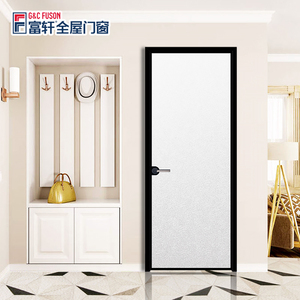
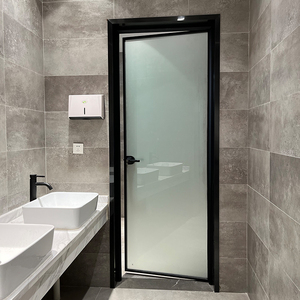
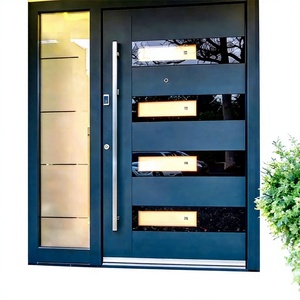
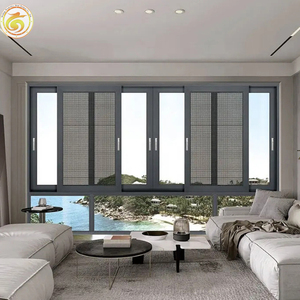
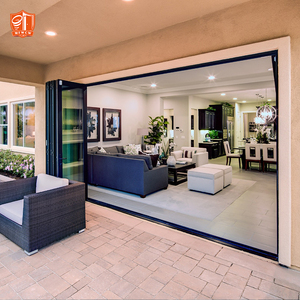
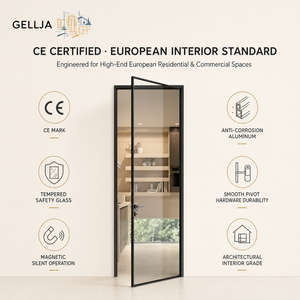
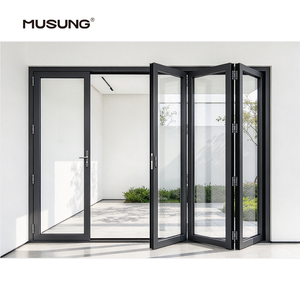
State-of-the-Art Production Base: Foshan's Fenestration Benchmark
Guangdong Dejiyoupin Doors and Windows Co., Ltd. (DERCHI) combines over 25 years of engineering innovation with automated German CNC machining centers, delivering certified architectural systems to tier-one global builders.
Fully integrated intelligent extrusion, powder coating & glazing base in Foshan, China.
Guaranteed on-time batch logistics for phased residential towers and master developments.
Proprietary Four-Side Six-Point security locks and isothermal barrier systems.
Specified across landmark projects including Hilton, Atour Hotels, and luxury villas.
Rigorous CE Certification Compliance
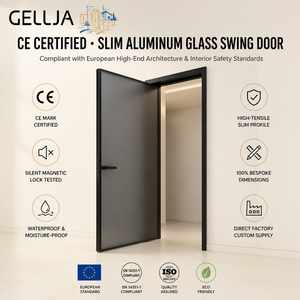
All products conform strictly to the European Construction Products Regulation (CPR 305/2011/EU) and EN 14351-1:2006+A2:2016. Testing protocols cover initial type-testing (ITT), Factory Production Control (FPC) audits, dynamic wind resistance (Class C3/B4), and Declared Performance (DoP) certificates for zero-risk customs clearance.
360-Degree Quality Verification System
Precision tolerances within ±0.5mm are maintained through automated 45-degree angle cutting, automatic corner-crimping with two-component polyurethane injection, and laser geometry checks. Every door leaf undergoes hydrostatic seal testing and cycle life mechanical actuation (up to 100,000 cycles) before crating.
Complete Port Supply Chain Proximity
Located in Nanhai, Foshan, our plant is within 2 hours of Guangzhou and Shenzhen deep-water maritime ports. This proximity optimizes container stuffing, minimizes inland transit vibration risks, reduces shipping lead times to Europe, the Middle East, and Southeast Asia, and stabilizes FOB/CIF procurement schedules.
Technical Verification: EN Harmonized Standards vs. Field Performance
An in-depth comparative benchmark of our CE-certified aluminium door systems engineered for extreme thermal gradients, coastal air salinity, and high-frequency commercial cycling.
| Performance Characteristic | European Test Standard | Baseline EN Standard | DERCHI Factory Achieved Grade | Compliance Status |
|---|---|---|---|---|
| Resistance to Wind Load | EN 12211 / EN 12210 | Class 2 (800 Pa) | Class C5 / B5 (≥ 3000 Pa) | Exceeds Standard |
| Watertightness (Static & Dynamic) | EN 1027 / EN 12208 | Class 4A (150 Pa) | Class E900 / 9A (≥ 900 Pa) | Exceeds Standard |
| Air Permeability (Infiltration) | EN 1026 / EN 12207 | Class 2 (300 Pa) | Class 4 (≤ 0.75 m³/h·m at 600 Pa) | Top European Grade |
| Thermal Transmittance (Uw) | EN ISO 10077-1 / EN ISO 10077-2 | Uw ≤ 2.2 W/(m²·K) | Uw 0.85 – 1.35 W/(m²·K) (Triple / Double Low-E) | Passivhaus Compatible |
| Acoustic Attenuation (Rw + C; Ctr) | EN ISO 10140-2 / EN ISO 717-1 | Rw ≥ 28 dB | Rw 38 dB – 46 dB (Laminated Acoustic PVB) | Class A Acoustic Comfort |
| Operating Forces & Durability | EN 12046-2 / EN 12400 | Class 1 (10,000 cycles) | Class 4 (100,000 Repeated Mechanical Cycles) | Heavy Commercial Rating |
European building regulators require all fenestration components installed on external building envelopes to carry valid CE marking backed by factory audit documentation. Our doors integrate polyamide (PA66 GF25) thermal breaks with 25% glass fiber reinforcement, co-extruded EPDM cellular weatherstrips, and certified IGUs filled with 90%+ Argon gas. Every container shipment includes full batch trace numbers, mill test reports (MTR), and third-party laboratory test certificates.
Future Procurement & Technological Trends in Architectural Fenestration
Navigating decarbonization mandates, smart building automation, and high-performance façade engineering over the coming procurement cycle.
Low-Carbon & Circular Aluminium
With the EU's Carbon Border Adjustment Mechanism (CBAM) entering full enforcement, tier-one developers prioritize low-carbon smelting powered by hydroelectric energy. Our factories utilize prime primary billets with scrap recycled content up to 40%, generating under 4.0 kg CO₂ per kg of extruded aluminium, providing full Environmental Product Declarations (EPD) for LEED v4 and BREEAM certifications.
Ultra-Narrow Sightlines & Concealed Sashes
Minimalist European aesthetics demand structural frames with face widths under 20mm while supporting insulated glass units exceeding 350 kg. This trend requires finite element analysis (FEA) to engineer internal profile reinforcing fins and high-strength alloy compositions (6063-T6 / 6061-T6), combining invisible floor tracks with barrier-free zero-threshold accessibility (DIN 18040-2).
Smart Building BMS & Mechatronic Actuation
Future door assemblies integrate concealed brushless DC motors, biometric RFID verification, and micro-gap motorized trickle ventilation interconnected with KNX, Modbus, and smart building management protocols. Concealed magnetic sensors monitor sash engagement, enhancing thermal envelope efficiency and active commercial security.
From Architectural CAD to Site Handover: 8-Step Lifecycle
Our standardized project management system ensures transparent milestone tracking, accurate structural design, and zero site-fitting variances for overseas developers.
Façade consultants examine architectural CAD/BIM files, calculating structural wind pressure (Pascal), deflection limits (L/200), and specific U-value targets.
High-grade 6063-T6 virgin ingots are extruded through proprietary precision dies, followed by multi-step aging to ensure Rockwell hardness ≥ 12 HRB.
German mechanical knurling machines insert glass-fiber polyamide strips (PA66 GF25), followed by continuous multi-roller pressure crimping and shear testing.
Electrostatic coating via automated vertical lines with PPG/AkzoNobel powders yields Qualicoat Class 2 weatherability or 25-micron architectural anodization.
Multi-axis CNC equipment cuts, drills, and mills hardware cutouts. Corners are reinforced with heavy cast cleats and hydraulic crimping machines.
Robotic IGU lines apply dual-seal polyisobutylene (PIB) and structural silicone. Automatic gas filling guarantees ≥ 90% Argon gas retention inside the cavity.
Sample door panels from every production run are fully mounted on test jigs to verify lock latching torque, smooth roller gliding, and perimeter air seal compression.
Products are wrapped with pearl cotton film, cushioned with corner guards, and secured inside fumigated non-wood plywood crates with desiccant packs.
Frequently Asked Questions for Project Specifiers & Importers
Clear, definitive technical and commercial answers addressing compliance, logistics, minimum order volumes, and hardware integration.
We operate under a complete Factory Production Control (FPC) system certified to ISO 9001. All glass units bear EN 12150 (tempered) and EN 1279 (insulating units) markings. We supply complete Initial Type-Testing (ITT) reports from accredited notified testing bodies, covering air permeability (EN 1026), watertightness (EN 1027), wind load resistance (EN 12211), and thermal performance calculations. Every shipment includes the mandatory Declaration of Performance (DoP) and CE product labelling.
For custom extruded or bespoke engineered fenestration orders, our typical production cycle is 30 to 45 business days following final approval of shop drawings and receipt of deposit. Standard stock configurations and architectural powder-coat finishes (such as RAL 7016 Anthracite Grey or RAL 9005 Jet Black) can be processed within 25 days. Phased delivery schedules are arranged for multi-tower projects to align with contractor crane schedules.
Yes. By pairing our multi-chamber 85mm to 105mm profile series featuring 34mm multi-cavity PA66 polyamide insulation strips with triple-glazed IGUs (e.g., 6 Low-E + 16Ar + 6 Clear + 16Ar + 6 Low-E) and Swiss Warm Edge composite spacers, we routinely achieve overall fenestration U-values (Uw) between 0.82 and 0.95 W/(m²·K), meeting Passivhaus standards across Northern Europe and North America.
While our proprietary Four-Side Six-Point Lock provides outstanding security, we maintain direct OEM supply partnerships with Europe's leading hardware brands, including Siegenia, Roto Frank, Hoppe, G-U, and Sobinco. All mechanical handles, heavy-duty rollers, and multi-point perimeter gearboxes are made of grade 304 or 316 stainless steel to eliminate galvanic corrosion in coastal zones.
We use heavy-duty steel reinforced A-frames or fully enclosed custom plywood crates lined with high-density EVA foam and waterproof poly-wrapping. Desiccant packs prevent container-rain moisture damage. Glass leaves are fitted with corner protectors and cork spacer pads to handle severe sea swell, vibration, and temperature swings across maritime trade lanes.
Our in-house R&D team of over 30 engineers utilizes Revit, AutoCAD, and SolidWorks. We convert architectural tender drawings into detailed manufacturing shop drawings—complete with structural anchoring details, flashing schematics, expansion joint tolerances, and glass load engineering calculations—for sign-off before manufacturing begins.