Architectural Specification & Global Export Whitepaper
CE Certified Aluminum Net Door Supplier & Exporters
Engineered Fenestration Systems Integrating 316 Marine-Grade Security Mesh, High-Strength Thermal Breaks, and Rigorous EN 14351-1 Compliance for Coastal, Tropical, and High-Wind Architectural Façades.
180,000m²
Smart Manufacturing Base
1,000,000m²+
Annual Fabrication Volume
100+
Patents & Global Certifications
18,000+
Completed Projects Globally
Certified Product Lines
Featured Commercial & Residential Fenestration Systems
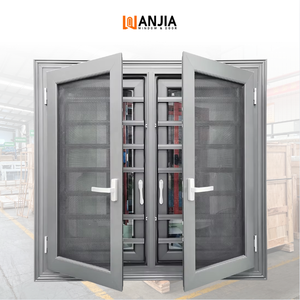
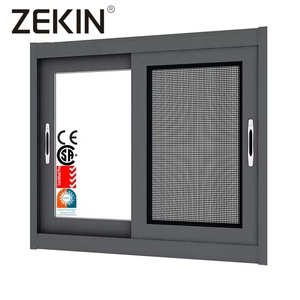
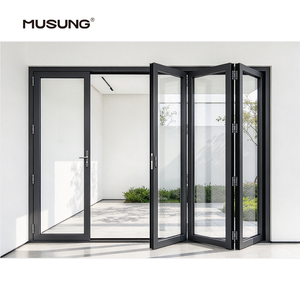
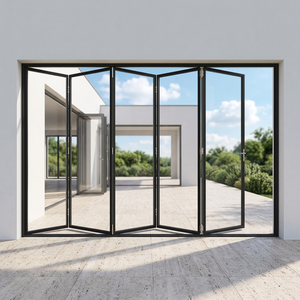
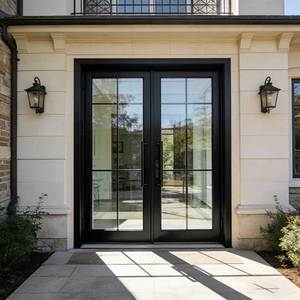
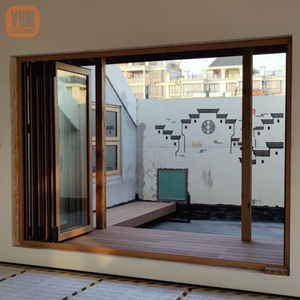
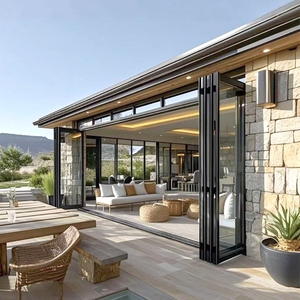
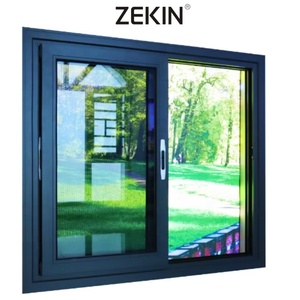
Explore our precision-fabricated aluminum net doors, impact-resistant casement windows, and high-performance sliding systems engineered with integrated insect, micro-mesh, and diamond security screens.
Engineered to endure positive and negative cyclical wind pressures up to 4500 Pa, combined with knife-shear tested 0.8mm 316 wire security screen mesh.
Critical Engineering Standards for CE Certified Aluminum Net Doors
For international procurement teams, general contractors, and structural consultants, specifying an aluminum net door system requires evaluating dynamic structural wind load deflection, air permeance, and corrosion resistance. In contemporary architecture, a screen or "net door" is no longer a lightweight insect barrier; it serves as a structural component providing child safety fall-prevention, hurricane barrier dampening, forced-entry deterrence, and thermal solar management.
To attain genuine CE Certification under EN 14351-1:2006+A2:2016, every system exported from our Foshan production facility undergoes rigorous verification:
Alloy Integrity & Wall Thickness: Engineered using virgin architectural grade 6063-T5 or 6063-T6 aluminum alloys, ensuring uniform tensile strength (≥160 MPa) with profile wall thickness ranging from 2.0mm to 3.0mm on load-bearing mullions.
High-Tensile Wire Mesh Integration: Utilizing marine-grade AISI 316 stainless steel woven wire cloth with wire diameters of 0.8mm to 1.0mm, achieving anti-cut shear test compliance and 500-hour neutral salt-spray (NSS) test performance.
Thermal Break Insulation: Reinforced polyamide PA66-GF25 thermal insulation strips eliminate thermal bridges, lowering overall frame U-values ($U_f$) to as low as 1.6 W/(m²·K).
Patented Hardware Locking: Integration of our proprietary Four-Side Six-Point Lock invention patent, distributing wind loads across the perimeter frame rather than isolated strike points.
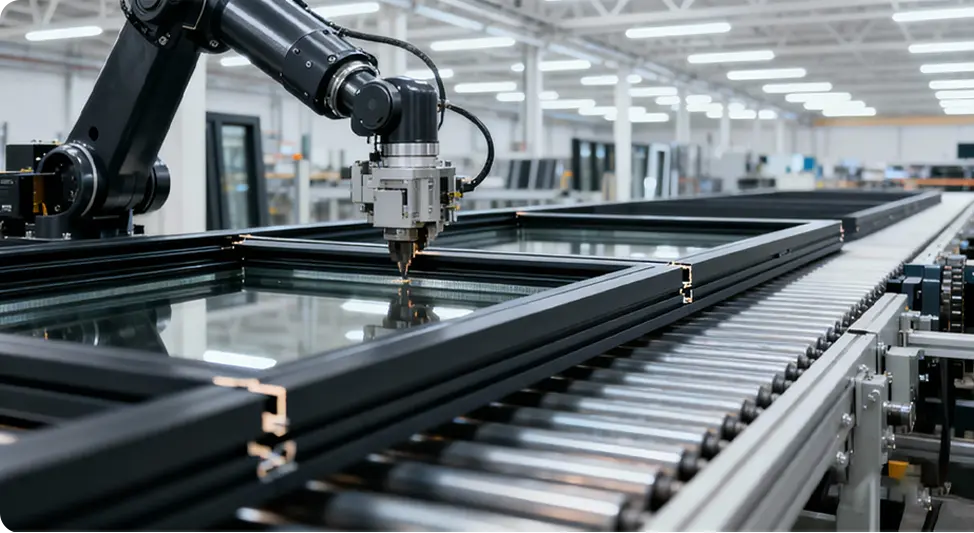
Intelligent 360° CNC Milling & QC
Quantitative Benchmarks
Technical Specification Matrix for Exporters & Consultants
Direct data comparison illustrating performance parameters across our CE, AS2047, and NFRC certified aluminum net and glazed door configurations.
Future Trends in Aluminum Net Door & Architectural Fenestration
Insights into the evolution of global supply chains, building decarbonization mandates, and emerging architectural hardware integration for 2026-2030.
1. Low-Carbon Circular Aluminum
Global procurement directives in Europe and North America increasingly demand Environmental Product Declarations (EPD). Modern aluminum net door extrusion focuses on hydro-powered or post-consumer recycled aluminum billet, reducing embodied carbon from 16 tons CO2e per ton of aluminum to less than 4 tons, without sacrificing tensile properties.
2. Hidden-Frame Mesh Integration
Architectural demand is moving toward ultra-slim sightlines. Future net doors abandon clumsy auxiliary add-on screen frames. Next-generation systems engineer the 316-security mesh or micro-retractable mesh channel directly inside the primary thermal break profile, hiding fixings and structural rivets for true zero-sightline aesthetics.
3. Smart Micro-Motorized Operation
Driven by smart home building automation, large sliding doors (reaching heights over 3.5 meters) require effortless actuation. Electromagnetic concealed drive belts and smart sensors automatically slide the glass panel and net door independently, complete with auto-reversing safety obstruction detection.
4. Climate-Adaptive Specialized Coatings
Coastal and high-salinity zones (e.g., Southeast Asia, Red Sea resorts, Caribbean residences) are transitioning from standard powder coats to fluoropolymer PVDF (Kynar 500) and super-durable Qualicoat Class 2 / AAMA 2605 specifications, providing up to 30 years of color retention and preventing galvanic corrosion between aluminum frames and stainless net screens.
Enterprise Strengths & Authority
Why Tier-1 Developers & Global Specifiers Rely on DERCHI
Headquartered in Nanhai District, Foshan—China's capital of high-end aluminum extrusion—Guangdong Dejiyoupin Doors and Windows Co., Ltd. delivers institutional manufacturing rigor.
180,000 m² Base
Massive automated digital manufacturing complex in Foshan capable of processing over 1,000,000 m² of precision fenestration annually, ensuring uninterrupted project schedules for mega-scale hospitality and residential projects.
100+ Patents & R&D
Staffed by 30+ dedicated façade and mechanical engineers holding over 100 patents, including the revolutionary Four-Side Six-Point Anti-Theft Lock that sets global standards for mechanical security.
Global Certifications
Complete compliance umbrella: CE (EU), AS2047 (Australia), NFRC / CSA (North America), ISO 9001, and specialized hurricane impact verification from accredited international testing laboratories.
300+ Partners & 18,000+ Cases
From prestigious Hilton hotel resorts and Beverly Hills villas to multi-unit complexes across Singapore, Malaysia, Saudi Arabia, and Europe, our delivery track record provides verified reliability.
The DERCHI 8-Step Project Engineering Workflow
Eliminating on-site errors and deviations for cross-border architectural projects through structured project management.
01. Drawing Review: Rigorous structural review of architectural CAD/BIM models.
02. R&D Optimization: Profile & glass tailoring for local climate wind & thermal criteria.
03. Technical Proposal: Comprehensive bill of materials, wind-load calculations & quote.
08. Installation Guidance: On-site or digital engineering coordination for project crews.
Procurement Knowledge Base
Frequently Asked Questions for Global Importers & Contractors
Clear, definitive technical and commercial answers addressing common engineering challenges in aluminum net door specifications.
What specific testing validates that an aluminum net door complies with CE EN 14351-1?
CE marking under European Standard EN 14351-1 requires verified Type Testing by a notified third-party body. Essential characteristics include: (1) Air permeability under EN 1026/EN 12207, (2) Watertightness under dynamic driving rain EN 1027/EN 12208, (3) Resistance to static wind loads under EN 12211/EN 12210, and (4) Operating forces under EN 12046-1. For systems incorporating security mesh screens, impact resistance (pendulum body test) and load-bearing capacity of safety devices (EN 948) are also certified to guarantee anti-fall and structural integrity.
What is the structural difference between 304 and 316 marine-grade security mesh?
While both are austenitic stainless steels, Grade 316 contains approximately 2% to 3% molybdenum, which significantly enhances resistance to pitting and crevice corrosion in chloride-rich environments (such as coastal zones within 5 km of the ocean, salt-fog climates, and swimming pool enclosures). For export projects in tropical coastal areas like Singapore, the Philippines, or Florida, DERCHI mandates black electropolished 0.8mm or 1.0mm 316-grade mesh to prevent tea-staining, galvanic oxidation, and wire degradation.
How does an integrated aluminum net door prevent thermal bridging in insulated buildings?
Traditional aftermarket screen doors introduce metallic contact directly onto outer structural framing, creating severe thermal bridges. DERCHI’s engineered systems utilize a dual or triple-chamber profile separated by glass-fiber reinforced polyamide (PA66-GF25) strips. The net screen channel is isolated within the external dry zone, completely divorced from the internal conditioned frame, maintaining overall fenestration system U-values between 1.4 and 1.8 W/(m²·K) and preventing interior frame condensation.
Can your production lines manufacture bespoke door sizes directly from architectural CAD/BIM schedules?
Yes. Through our 8-step project engineering protocol, our technical division accepts DWG, DXF, and Revit BIM model schedules. Every opening is translated into millimeter-accurate CAM programs directly uploaded to our automated 5-axis CNC machining centers. Custom transom configurations, architectural mullion spacings, sub-frame sill extensions, and custom structural fixings are incorporated prior to fabrication to guarantee 100% on-site fit.
How are heavy-weight folding and sliding net doors packed to prevent transit deformation during ocean freight?
All exported doors undergo a 4-tier protection sequence: (1) Electrostatic PE film protection on powder-coated/anodized surfaces, (2) Corner foam buffers on all four miters, (3) Double-wall corrugated wrap, and (4) Fumigated heavy-duty plywood crates with inner steel tension strapping. Crates feature bottom pallet skids for forklift loading without tilting, preventing frame rack or glass deflections during multi-week intermodal ocean transport.
Connect with our technical export engineering department for full project pricing, official CE/AS2047/NFRC certificates, profile CAD cross-sections, and comprehensive architectural product catalogs.