Precision-Engineered Aluminium Bathroom Windows & Wet-Room Systems
Explore our high-performance fenestration solutions, integrating multi-chamber thermal breaks, capillary weeping drainage channels, and obscure acoustic glazing to withstand continuous 99% relative humidity and severe pressure differentials.
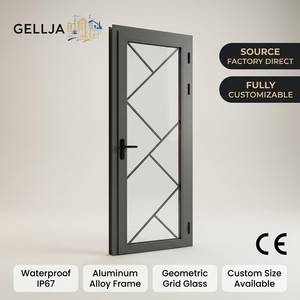 Thermal Break
GELLJA Waterproof Aluminum Interior Door Blue Tinted Glass Geometric Pattern Thermal Break CE
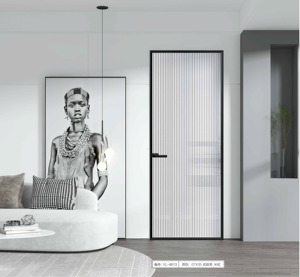 Slimline Profile
China Factory High Quality Cheap Price Adjustable Aluminium Slim Casement/hinged Door
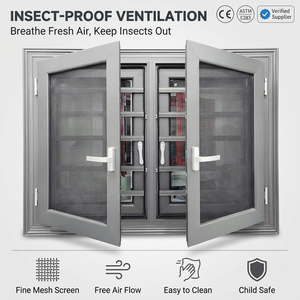 Acoustic Glazed
Window Aluminum windows and Doors Big Sliding Skylight Armored Glass Aluminium Awning Double Glazed
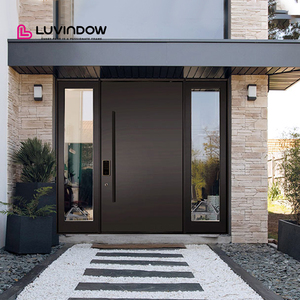 Heavy Duty
Modern Anti-Theft Security Aluminum Front Entry Doors for Villas Waterproof Exterior Main Gate
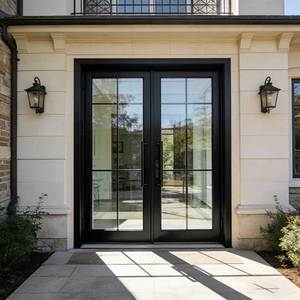 NFRC Certified
Sunnysky NFRC Commercial Front Entry Doors Business Double Glazed Wind Proof French Doors
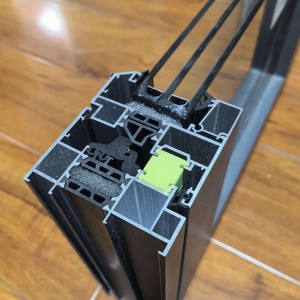 Top Spec Casement
Thermal Break Aluminum Windows Double Glazed Casement Window Energy Efficient Soundproof
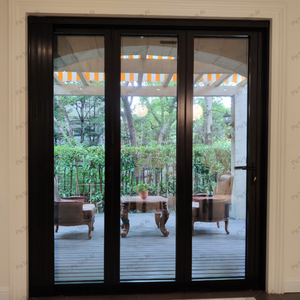 Flexible Bi-Fold
3 Panel Aluminum Folding Door Small Opening Tempered Glass Bi Fold Door for Kitchen Balcony Use
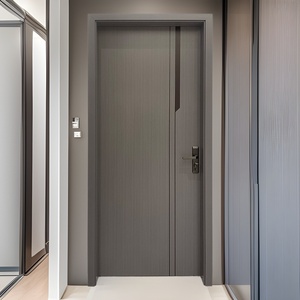 Anti-Theft Acoustic
Foshan Aluminum Alloy Anti-Theft Bedroom Door Household Soundproof All-Aluminum Interior Study Door
Engineering Whitepaper: Technical Architecture of Modern Aluminium Bathroom Windows
Bathroom and wet-room fenestration represents one of the most demanding sub-disciplines in contemporary facade engineering. Unlike conventional facade openings that manage standard atmospheric cycles, a bathroom window must continually regulate severe microclimate extremes: internal temperatures surging up to 45°C with 100% relative humidity, simultaneous exterior cold snaps down to -20°C or tropical monsoonal storms, aggressive aerosolized surfactants from personal hygiene products, and structural moisture barriers. Without precise thermal-break isolation, high-yield metallurgical alloy selection, and advanced vapor management, substandard bathroom fenestration inevitably suffers from persistent dew-point condensation, interstitial seal degradation, structural black mold colonization, and galvanic frame corrosion.
1. Metallurgical Formulation & High-Tolerance Profile Extrusion
As China's premier manufacturer based in the Nanhai District of Foshan, our structural manufacturing utilizes virgin 6063-T5 and 6063-T6 architectural aluminium billets exclusively. These structural profiles maintain a tensile strength exceeding 205 MPa and a yield strength of 180 MPa, ensuring structural deflection stays within L/250 under high negative wind pressure loads. For high-humidity wet-room environments, standard mill-finish or decorative spray coatings are fundamentally inadequate. We apply ultra-thick PVDF (Polyvinylidene Fluoride) fluorocarbon coatings conforming to AAMA 2605 or high-density architectural anodization rated up to Qualicoat Class 3. This surface protection establishes an electrochemical barrier impervious to chlorinated tap water, atmospheric salt spray, high-pH cleaning detergents, and continuous vapor condensation.
2. Thermodynamics of Condensation Prevention: Polyamide Isobars
The primary structural defect observed in commoditized aluminium bathroom windows is framing thermal bridge conductivity. Aluminium has an exceptionally high thermal conductivity of approximately 205 W/(m·K). In winter, when hot shower steam contacts an uninsulated aluminium sash, the interior frame temperature instantly drops below the dew point, producing immediate sweating, runoff, and eventual sub-wall rotting. Our systems eliminate this through precision-extruded PA66 GF25 (polyamide 6.6 reinforced with 25% structural glass fibers) thermal break strips. Engineered with a thermal conductivity of merely 0.3 W/(m·K), these thermal barriers match the thermal expansion coefficient of aluminium (2.3 × 10⁻⁵ K−1), preventing shear delamination during thermal cycling while maintaining an overall frame U-factor as low as 1.4 W/(m²·K).
| Engineering Parameter | Standard Commercial Window | DERCHI High-Spec Bathroom Window | Architectural Performance Gain |
|---|---|---|---|
| Aluminium Alloy / Temper | Recycled Billet 6063-T4 | Primary Billet 6063-T5 / T6 | +42% Tensile Yield Strength & Deflection Resistance |
| Thermal Barrier Technology | None / Non-insulated Profile | PA66 GF25 Polyamide Isobar (24mm–34mm) | Frame condensation completely suppressed above -15°C |
| Coating Corrosion Life | Standard Anodized (10μm) | Fluorocarbon PVDF 3-Coat (AAMA 2605 ≥ 40μm) | Resists 4,000+ Hours ASTM B117 Salt Fog Exposure |
| Gasket Sealing System | Vulcanized PVC Gaskets | Three-Tier Continuous Co-extruded EPDM Foamed | Zero shrinkage, maintains elasticity at -30°C to +120°C |
| Water Penetration Resistance | Class 3 (300 Pa) | Class E1200 (≥ 1,200 Pa) | Guarantees zero leak under violent typhoon storm conditions |
| Acoustic Isolation (Rw / STC) | 24 dB – 28 dB | 38 dB – 44 dB | Complete acoustic privacy for hotel en-suites and master bathrooms |
3. Privacy Engineering: Low-E, Frosted, Acid-Etched & Switchable PDLC
Balancing acoustic separation, natural illumination (daylighting factor ≥ 2.0), and strict visual privacy requires comprehensive glazing configurations. We fabricate insulated glass units (IGUs) incorporating warm-edge silicone structural spacers and dual polyisobutylene (PIB) primary seals, backfilled with dual-component structural silicone. Visual privacy is configured via satin acid-etched obscure finishes, directional fluted Moru patterns, or active Polymer Dispersed Liquid Crystal (PDLC) switchable privacy laminates that transition from opaque to 88% optical clarity within 20 milliseconds at the touch of a wall switch or home automation controller.
Future Global Procurement Trends in Bathroom Fenestration (2025–2030)
Analyzing key structural shifts across commercial hospitality projects, high-density residential towers, and luxury modular construction to help international developers minimize supply chain lifecycle risk.
1. Embodied Carbon & Low-Carbon Billets
Procurement teams in the EU, UK, and Australasia now mandate Environmental Product Declarations (EPDs). Sourcing certified recycled content and hydro-powered smelting aluminium profiles lowers embodied carbon by up to 68%, satisfying LEED Gold and BREEAM Outstanding standards.
2. Off-Site Prefabricated Pod Fenestration
Rapid expansion of modular bathroom pods for commercial hospitality demands pre-glazed, sub-frame integrated window cassettes. Unitized window units with integrated perimeter water flashing flanges shorten on-site installation by 80% while eliminating worker sealant errors.
3. Multi-Point Perimeter Compression
Single-point handles and latch bolts are rapidly being phased out by structural engineers. Modern specifications require concealed multi-point locking rods that uniformly draw the sash against perimeter compression seals, ensuring airtight sealing under severe wind suction.
4. Marine-Grade Stainless Hardware
Premature zinc-alloy hinge and screw degradation in high-steam environments causes significant warranty claims. Modern contracts require SS304 or marine-grade SS316 multi-link friction stays, hinges, and fastening hardware to eliminate galvanic corrosion.
5. Integrated Trickle Micro-Ventilation
To eliminate post-shower condensation without opening window sashes to driving rain or compromising security, developers specify acoustic acoustic micro-trickle vents with integrated insect screens and automatic moisture-sensitive mechanical flaps.
6. Ultra-Narrow Architectural Sightlines
Boutique hotel designs demand flush interior and exterior aesthetics with minimal visible frames. Concealed hinges, hidden drainage weep holes, and sash profiles narrower than 45mm deliver a clean, modern aesthetic while maximizing daylight ingress.
Next-Generation Development & Fenestration Technology Trends
The convergence of building automation, passive house design standards, and smart materials is transforming bathroom windows from passive wall fixtures into active environmental control systems. Forward-looking architectural firms and developers must evaluate three pivotal technological advancements currently moving into mainstream manufacturing:
1. Decentralized Heat Recovery Trickle Ventilation
Traditional bathroom extract fans expel heated or conditioned air directly outside, generating significant building energy loss. Advanced aluminium bathroom window frames now integrate miniaturized, in-profile mechanical ventilation with heat recovery (MVHR). Ceramic regenerator cores capture up to 82% of the thermal energy from warm exhaust air while supplying filtered fresh air continuously. This process stabilizes indoor relative humidity below 60% without opening the primary window sash, eliminating condensation on mirrors and cold tile surfaces.
2. Zero-Dead-Angle Sub-Sill Pressure-Equalized Drainage
Water infiltration in high-wind zones occurs when pressure inside the frame drainage chamber is lower than outside dynamic wind pressure. Leading Foshan manufacturers employ multi-chamber pressure-equalized rainscreen systems. By venting the internal wet chamber to the outside, pressure differentials equalize instantly. Water drains via gravity down stepped sill slopes without being forced inward, even under monsoonal storms with dynamic wind pressure exceeding 1,600 Pascals.
3. Smart Electrochromic & Photovoltaic BIPV Integration
Beyond passive frosted or laminated glass, electrochromic dynamic glass allows continuous modulation of light transmission (from 60% down to 1%) and total visual privacy via low-voltage electrical signals. Integrated Building-Integrated Photovoltaic (BIPV) framing strips capture solar energy from the building facade, providing self-contained power for the window's motorized actuators, rain sensors, and dynamic privacy glass without requiring complex in-wall wiring.
Guangdong Dejiyoupin (DERCHI) Doors and Windows Co., Ltd.
Headquartered in Foshan, China — the global epicenter of precision aluminium extrusion — DERCHI represents 25+ years of fenestration engineering excellence, serving commercial developers, general contractors, and distributors worldwide.
Enterprise Advantages: Why Tier-1 Global Contractors Partner with DERCHI
Sourcing direct from our Foshan production facility provides project owners with exceptional structural quality, complete pricing transparency, and dedicated engineering oversight across the complete project lifecycle.
Zero-Defect CNC Production
Equipped with German and Italian multi-axis automated CNC machining centers. Digital corner crimping and automatic seal injection ensure dimensional tolerances remain strictly within ±0.5mm across high-volume production runs.
Patented Anti-Theft Locks
Holding over 100 independent patents, including our proprietary Four-Side Six-Point perimeter locking mechanism. This system locks the sash uniformly into the frame, providing exceptional resistance to forced entry and high negative wind loads.
Comprehensive Global Certification
Full testing documentation and certification for rapid site approval, including European Union CE, American NFRC, Australian AS2047, Canadian CSA, Energy Star, and ISO 9001 quality management standards.
30+ In-House Façade Engineers
Our dedicated engineering department reviews architectural blueprints, calculates dynamic wind load stresses, models thermal heat transfer (THERM/WINDOW simulation), and delivers comprehensive shop drawings before cutting begins.
18,000+ Completed Installations
Demonstrated project performance across luxury hotel flags including Hilton, Atour, Beverly Hills estates, and luxury multi-family towers throughout Asia, North America, Oceania, and the Middle East.
Logistical & Export Advantage
Situated within 40 minutes of Guangzhou and Shenzhen deep-water container ports. Custom heavy-duty non-fumigation plywood crate packaging ensures zero transit damage across transoceanic shipping routes.
The DERCHI 8-Step Turnkey Engineering Protocol
To eliminate discrepancies between architectural design intent and site installation, our engineering department enforces a rigorous eight-stage quality assurance protocol on every export order:
- Step 1: Drawing & Specification Deep-Dive: Structural analysis of rough architectural openings, wind pressure requirements, and target thermal acoustic metrics.
- Step 2: Technical Profiling & Thermal Simulation: Modeling of profile extrusion depths, glass cavity widths, and thermal break placement.
- Step 3: Detailed Technical Proposal & Cost Engineering: Line-item material cost schedule with verified performance metrics and code compliance certificates.
- Step 4: Shop Drawing Sign-Off: Full 1:1 scale cross-sectional structural drawings signed and sealed for architectural approval.
- Step 5: Order Deposit & Master Scheduling: Integration into the automated CNC enterprise resource planning system with clear milestones.
- Step 6: Prototype Mockup & Tolerance Verification: First-article fabrication and test fitting to check corner joints, hardware alignment, and seal compression.
- Step 7: Automated CNC Production & 360° QC: Full automated cutting, CNC machining, corner crimping, and triple-sealed moisture chamber testing.
- Step 8: Global Logistics & Installation Guidance: Custom moisture-barrier crating, international customs documentation, and on-site or digital installation support.
Frequently Asked Questions (FAQ) — Aluminium Bathroom Windows
Direct technical answers to the most common engineering, compliance, and procurement questions raised by commercial contractors, quantity surveyors, and project developers.
Partner Directly with China's Premier Fenestration Manufacturer
Send your project blueprints, window schedules, and performance specifications to our engineering team. We will deliver a complete technical review, thermal calculations, and competitive factory-direct pricing within 24 hours.
Send an Inquiry