Featured Precision Fenestration & Entrance Systems
Engineered to exceed strict global architectural standards including CE, AS2047, NFRC, and ASTM. Manufactured under robotic 360° quality management matrices.
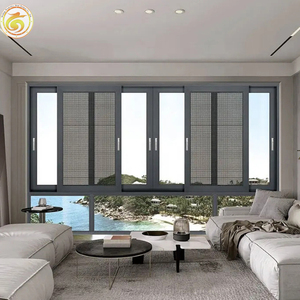
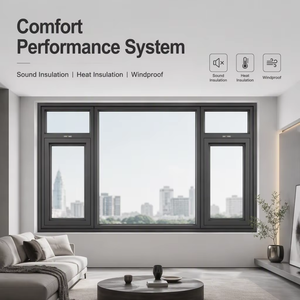
The Definitive Architectural Manual for Global Aluminium Casement Window Procurement
Evaluating structural deflection thresholds, multi-cavity thermal break extrusions, acoustic attenuation, and supply chain integrity from China's premier fenestration cluster.
In international architectural fenestration, sourcing from a top aluminium casement windows exporter in China requires an engineering-first perspective. Global developers, structural consultants, general contractors, and trade wholesalers recognize that modern building envelopes demand an unprecedented convergence of thermal barrier efficiency, extreme cyclical wind-load capacity, watertightness, and aesthetic minimalism. Operating out of the Shishan Town industrial corridor in Nanhai District, Foshan—widely acknowledged as the global capital of architectural aluminum extrusion and precision metal fabrication—Guangdong Dejiyoupin Doors and Windows Co., Ltd. (DERCHI) represents the pinnacle of Chinese fenestration engineering, integrating state-of-the-art European machining tolerances with high-throughput manufacturing agility.
Alloy Metallurgy & Structural Wall Thickness
Utilizing strictly virgin 6063-T5 and structural 6063-T6 primary aluminum billets instead of contaminated remelt scraps. Profile wall thicknesses exceed national minimums (1.8mm to 2.2mm for residential casements; 2.5mm to 3.0mm for commercial high-load openings), guaranteeing extreme flexural modulus and screw-retention pullout resistance under positive and negative wind pressures.
PA66 GF25 Polyamide Thermal Barrier Technology
Eliminating indoor-outdoor thermal bridging using glass-fiber reinforced polyamide (PA66 GF25) multi-cavity thermal barrier struts. Profile chamber cavities are custom-injected with high-density polyurethane insulation foams, driving frame thermal transmittance ($U_f$) down to an impressive 1.3 to 1.7 W/(m²·K), effortlessly compliant with stringent global energy codes like Title 24, ASHRAE 90.1, and NCC Section J.
Patented Four-Side Six-Point Security Systems
Traditional casement windows frequently fail along the non-hinged corners under wind-driven monsoons or forced-entry attacks. DERCHI's patented multi-point active driving hardware features dual mushroom cams and heavy-duty 304 stainless steel keepers across all four frame perimeters, producing an unyielding airtight compression seal and world-class burglar resistance.
Engineering Specification & Performance Verification Matrix
Empirical technical ratings measured across international fenestration testing regimes: AS2047 (Australia), NFRC/AAMA (USA), and EN 14351-1 (European Union).
| Casement Series Profile | Wall Gauge | Thermal Barrier | Overall Window U-Value ($U_w$) | Acoustic Cut (STC / $R_w$) | Wind Load (Serviceability/Ultimate) | Water Tightness (Pa) |
|---|---|---|---|---|---|---|
| 65 Slimline Thermal Break | 1.8 mm | 20 mm Multi-Chamber PA66 | 1.6 – 1.8 W/(m²·K) | STC 34 – 38 dB | 3000 Pa / 4500 Pa (AS2047 Class N4) | 600 Pa (Monsoon Grade) |
| 75 Architectural Passive Series | 2.0 mm | 35.3 mm Low-E Foam Cavity | 1.1 – 1.4 W/(m²·K) | STC 39 – 43 dB | 4000 Pa / 6000 Pa (AS2047 Class N6) | 750 Pa (Coastal Exposed) |
| 85 Heavy-Duty Cyclone System | 2.2 – 2.5 mm | Dual PA66 + EPDM Co-Extruded | 1.2 – 1.5 W/(m²·K) | STC 42 – 46 dB | 5000 Pa / 7500 Pa (ASTM E330 Cyclone) | 900 Pa (High-Rise Severe) |
| 108 Integrated Security Screen Casement | 2.0 + 1.4 mm | 30 mm Structural Composite | 1.4 – 1.7 W/(m²·K) | STC 36 – 40 dB | 3500 Pa / 5250 Pa (Tropical Coastal) | 700 Pa (Monsoon Drainage) |
Dual-Component Corner Joint & Iso-Compression Sealing
The lifespan of an exported aluminum casement window is fundamentally governed by the structural integrity of its miters. DERCHI rejects basic mechanical screw-corner assembly in favor of high-load hydraulic corner crimping combined with cast aluminum corner cleats and stainless steel alignment chevrons.
Every 45-degree profile joint is injected with German-formulated two-component polyurethane corner adhesives (G-glue). This chemical weld forms an impenetrable hermetic seal that completely eliminates micro-gaps, preventing water ingress, frame racking, and oxidation while shipping across ocean freight routes with high temperature and humidity fluctuations.
High-Performance Glazing Architecture
A window's thermal envelope is only as strong as its insulated glazing unit (IGU). Standard casement offerings from DERCHI integrate double or triple tempered Low-Emissivity glass combinations with warm-edge composite spacers and 95% pure Argon gas fills.
By engineering custom solar heat gain coefficients (SHGC from 0.22 in equatorial Middle East/Southeast Asian projects to 0.55 in sub-polar climates) and incorporating acoustic laminated glass (featuring 0.76mm to 1.52mm Solutia Saflex or Kuraray SGP structural interlayers), DERCHI casement systems systematically isolate airborne street sound frequencies, providing serene interiors down to 30 dBA.
Emerging Sourcing & Procurement Trends (2025–2030)
Strategic intelligence for international fenestration buyers navigating carbon border taxes, smart building standards, and geopolitical supply chain diversification.
Decarbonization & Low-Carbon Primary Smelting
Global architectural tenders increasingly evaluate embodied carbon through strict Environmental Product Declarations (EPDs). Sourcing from China now revolves around hydroelectricity-powered and renewable-energy smelting plants in southwestern China. By implementing green aluminum raw material pathways, DERCHI enables foreign property developers to achieve peak LEED Platinum, BREEAM Outstanding, and Green Mark Platinum ratings while bypassing CBAM (Carbon Border Adjustment Mechanism) tariff penalties.
Ultra-Slim Sightlines & Concealed Hardware
The luxury residential and boutique hospitality segments have shifted decisively away from chunky window frames toward frameless visual expressions. Forward-thinking exporters have engineered concealed friction hinges, embedded flush-mounted transmission gearboxes, and sashes that align coplanar with the outer structural frame. This engineering achievement delivers unobstructed 94% glass-to-frame ratios without sacrificing wind load resistance or air permeability metrics.
Super-Typhoon & Extreme Weather Defense
Climate volatility has created unprecedented demand for certified extreme-weather fenestration across coastal East Asia, Australia, Florida, and the Caribbean. Procurement criteria have shifted from static pressure testing to cyclic dynamic water and wind impact resistance (ASTM E1886/E1996 Missiles Level D). Top exporters engineer dual-drainage hidden cavity sills that evacuate deluge rainwater at speeds up to 120 liters/min/m² under simulated hurricane wind gusts.
Smart Mechatronic Actuation & IoT Building Integration
Commercial developments and automated high-end residential estates increasingly mandate the integration of silent chain actuators concealed directly within the aluminum sash rebate. Modern casements function as active nodes within the Building Management System (BMS), responding automatically to ambient temperature, VOC/CO2 indoor air quality sensors, and wind/rain monitors, alongside biometric fingerprint and smart home app authorization.
BIM Level 3 Collaboration & Digital Twin Supply Chains
The era of paper drawings and PDF-only communication has ended. Modern architectural supply chains require fenestration exporters to provide parametric Revit/BIM models populated with accurate thermal properties, structural weight data, and anchor-point engineering. DERCHI’s digital engineering team integrates shop drawings directly into client architectural models, preventing on-site framing clashes, structural interference, and costly installation redesigns.
Qualicoat Class 2 & Fluorocarbon (PVDF) Resilience
Coastal corrosion and high UV exposure remain the primary causes of field failures in exported fenestration. Sourcing mandates now demand Qualicoat Class 2 hyper-durable thermoset powders and AkzoNobel/PPG 70% Kynar 500 fluorocarbon (PVDF) 3-coat finishes. These coatings endure 4,000+ hours of continuous neutral salt-spray exposure without blistering, chalking, or fading, backed by a 20-to-30-year marine environment warranty.
The 8-Step Engineering & Export Verification Protocol
DERCHI’s zero-tolerance, closed-loop manufacturing methodology guarantees flawless execution from project tender through on-site installation handoff.
Structural & Drawing Audit
Senior façade engineers evaluate client architectural elevations, wind tunnel calculations, opening structural lintels, and local climatic loads to recommend ideal profile series and glass thicknesses.
R&D Profile Optimization
Custom die extrusion development, drainage profile adaptation, and polyamide thermal strut calculations are modeled in finite element thermal simulation software (THERM & WINDOW).
Value Engineering Proposal
Comprehensive technical bid documents are produced, detailing bill-of-materials (BOM), structural connection details, perimeter sealant interfaces, and accurate international shipping logistics costing.
BIM & Shop Drawing Sign-Off
Full-scale 1:1 CAD and Revit shop drawings detailing anchoring brackets, sub-frame flashings, hardware strike centerlines, and glass pocket clearances are finalized for formal consultant approval.
Physical Sample Prototyping
Full-scale corner cutaways or entire operational window mock-ups are manufactured and dispatched to the architect for finish verification, tactile hardware assessment, and acoustic testing.
Intelligent CNC Fabrication
High-speed 5-axis German machining centers drill, mill, slot, and cut profiles with 0.1mm repeatability. Automated crimpers and dual-glue injection create unyielding corner joints.
360° Chamber Inspection
Before container loading, batch samples undergo air infiltration, static water penetration, and 50,000-cycle hardware endurance testing in our internal hydraulic laboratory.
Export Crating & On-Site Support
Windows are cocooned in protective films and secured inside fumigated vertical steel A-frames. Engineers provide remote or on-site installation guidance to ensure flawless perimeter air sealing.
Why DERCHI Is the Leading Chinese Fenestration Exporter
Combining deep technical expertise, unmatched production scale, and complete vertical supply chain integration within Guangdong’s industrial heartland.
Complete Supply Chain Integration
Located in Foshan, DERCHI operates within the world's most concentrated ecosystem for aluminum extrusions, hardware foundries, glass processors, and specialized packing supplies. We source directly from tier-one extrusion houses, maintaining strategic stockpiles of prime architectural billets to cushion clients against global commodity swings and shorten lead times to just 25–35 days.
Elite R&D & In-House Tooling Division
Our engineering division comprises over 30 specialized structural, thermal, and façade design engineers. We don't just assemble catalog components; we design proprietary profile dies, develop thermal-break configurations, and create specialized hardware solutions. Holding over 100 patents, our R&D center actively pioneers new product solutions tailored to emerging regional building codes.
Rigorous International Accreditations
Every casement series engineered for export undergoes comprehensive, third-party physical laboratory testing. Our systems hold European CE conformity (EN 14351-1), North American NFRC and CSA energy certifications, Australian AS2047 and AS1288 accreditation with certified testing by AZUMA laboratories, as well as high-velocity hurricane certifications (TAS 201/202/203) for coastal zones.
Frequently Asked Questions for International B2B Buyers
In-depth technical and commercial answers addressing shipping security, quality verification, engineering tolerances, and compliance standards.