Industrial Sourcing & Engineering Authority from Foshan
As commercial building envelopes and luxury residential developments demand higher thermal efficiency and extreme weather resistance, selecting an established Chinese aluminum window manufacturer requires assessing verified fabrication tolerances, raw ingot purity (6063-T5/T6 primary alloy), and certified structural performance. Based in Nanhai District, Foshan—the epicenter of global architectural aluminum extrusion—our industrial facility integrates digital CAD/BIM modeling, multi-cavity thermal barrier assembly, and automated glazing lines to deliver turnkey solutions worldwide.
Integrated Production Base
Annual Fabricated Capacity
Proprietary Patents & Hardware
Global Commercial & Villa Projects
Featured Aluminum Window Solutions
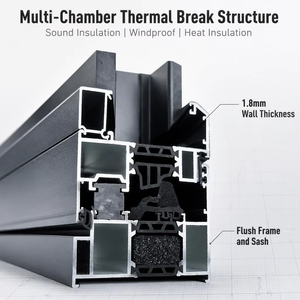
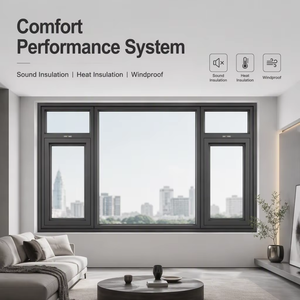
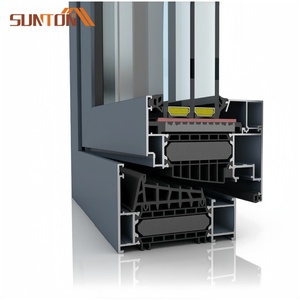
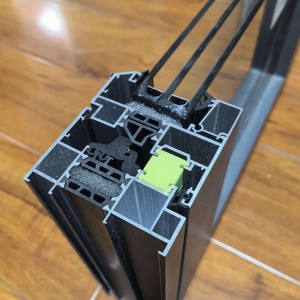
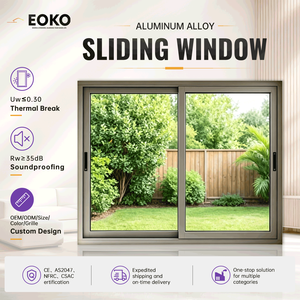
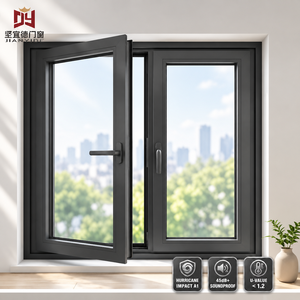
Explore our precision-engineered aluminum window assemblies. Each unit is configured with multi-point perimeter security locking, technoform polyamide thermal breaks, and dual/triple tempered Low-E insulated glass units (IGU) tested to ASTM, AAMA, and AS2047 benchmarks.
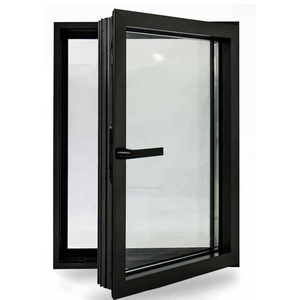
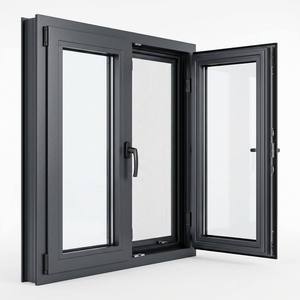
Architectural Fenestration Development Trends
Modern facade engineering has shifted from basic single-barrier window framing to thermodynamic barrier systems that treat fenestration as an active energy insulator. Architects, general contractors, and facade consultants are driving window development through these mission-critical parameters:
Polyamide PA66 GF25 Multi-Cavity Barriers
Traditional single-strip thermal breaks are being replaced by multi-chambered polyamide 6.6 with 25% glass fiber reinforcement (PA66 GF25). These composite thermal struts bridge outer and inner aluminum sections, preventing thermal conductivity (K-value under 1.6 W/m²·K) while resisting internal shear stress caused by significant indoor-outdoor temperature differentials.
Low-Iron Triple-Glazing & Warm-Edge Spacers
Meeting net-zero targets requires high-efficiency glass units. Contemporary configurations use triple-glazed panels separated by argon gas (90%+ fill) and structural warm-edge composite spacers (such as Technoform or Swisspacer) that eliminate edge condensation. Paired with soft-coat double or triple Low-E sputtering, system U-factors drop below 0.8 W/m²·K (Passive House standard).
Extreme Wind Load & Missile Impact Resistance
For high-rise residential towers and coastal regions vulnerable to hurricanes and typhoons (such as Florida, the Caribbean, Japan, and Southeast Asia), window systems must withstand cyclonic wind pressures exceeding 4,500 Pa. Profiles incorporate reinforced 6063-T6 corner keys, heavy-duty stainless friction stays, and laminated safety glass (SentryGlas / PVB interlayer) tested to ASTM E1886/E1996 and AS2047 cyclonic categories.
Minimalist Sightlines with Concealed Drainage
Modern luxury architecture demands maximum daylight and clean sightlines. System profiles utilize concealed sash structures where the operable sash is hidden behind the outer frame, reducing visible mullion widths to under 35mm. Multi-tier pressure equalization chambers channel driving rain through concealed bottom drainage tracks without visible front weep hole caps.
Acoustic Isolation for Dense Urban Developments
With urbanization adjacent to highway transit corridors and airports, sound transmission loss is a primary performance factor. Modern aluminum window systems integrate multi-layer EPDM cellular rubber co-extruded gaskets and asymmetric laminated glass (e.g., 6mm Low-E + 12Ar + 4mm + 0.76Acoustic PVB + 5mm) achieving Sound Transmission Class (STC) ratings above 42 dB.
Global Sourcing & Procurement Trends (2025–2030)
International contractors, real estate developers, and modular builders are updating their supply chain procurement strategies. Sourcing aluminum windows from China has shifted from simple labor arbitrage to sophisticated engineering collaboration, driven by four key developments:
Low-Carbon Primary Ingot & EPD Verifications
Developers targeting LEED Platinum, BREEAM, and Green Star certifications now require certified Environmental Product Declarations (EPD). Sourcing mandates favor Chinese suppliers utilizing hydro-powered recycled aluminum and low-carbon billets (sub-4.0 kg CO₂/kg Al) over coal-smelted alternatives.
BIM Integration & 3D Digital Twin Shop Drawings
Leading project developers now bypass 2D shop drawings, demanding direct LOD 400 Building Information Modeling (BIM) objects. Our technical department interfaces directly with Revit and Rhino files, generating computerized CNC cut files directly from architectural models to eliminate job site dimensional discrepancies.
Pre-Glazed Unitized Prefabrication
With western site labor costs at historic highs, procurement teams increasingly favor completely pre-glazed, factory-assembled and tested window units. Arriving on steel transport stillages ready for crane hoist and sub-frame anchoring, this approach reduces onsite installation labor by up to 65%.
Total Life-Cycle Hardware Guarantees
Procurement teams are replacing no-name domestic hardware with branded European and premium proprietary hardware systems. Systems specified with German Siegenia, Hoppe, or our patented Four-Side Six-Point locking components undergo 25,000 to 50,000 continuous cycle tests with 10-year salt spray corrosion warranties (AAMA 611/AAMA 2605).
Engineering Specification & Testing Benchmark
Compare standard commercial vs. DERCHI engineered architectural performance ratings across international building code requirements:
| Performance Characteristic | Testing Standard | Conventional Industry Baseline | DERCHI Engineered System Rating | Significance for Project Specifiers |
|---|---|---|---|---|
| Thermal Transmittance (U-Value) | NFRC 100 / ISO 10077-2 | U: 2.2 - 2.8 W/m²·K | U: 0.78 - 1.20 W/m²·K | Meets Passive House and strict North American & European energy codes. |
| Air Infiltration Resistance | ASTM E283 / EN 12207 | 0.30 cfm/ft² (Class 2) | ≤ 0.05 cfm/ft² (Class 4 / A4) | Eliminates drafts, minimizes building envelope HVAC air leakage losses. |
| Water Penetration Resistance | ASTM E331 / EN 12208 | 300 Pa - 450 Pa | 900 Pa - 1,200 Pa (Static & Dynamic) | Guarantees no water leakage during Category 4-5 typhoon conditions. |
| Structural Wind Load (Deflection) | ASTM E330 / AS 2047 | 1,500 Pa - 2,500 Pa | 4,500 Pa - 6,000 Pa (Serviceability) | Permits oversized floor-to-ceiling glass in high-rise coastal conditions. |
| Acoustic Attenuation (STC/Rw) | ASTM E90 / ISO 717-1 | STC 28 - 32 dB | STC 38 - 44 dB | Blocks urban street noise, rail transit rumble, and airport approach sounds. |
| Finish Durability (Fluoropolymer) | AAMA 2605 / Qualicoat Class 3 | Standard Polyester (5-Yr) | PVDF / 70% Kynar 500 (20-Yr+ Warranty) | Zero chalking, fading, or salt-corrosion peel on oceanfront developments. |
Why Top Global Specifiers Partner with DERCHI
With 25+ years of dedicated fenestration manufacturing in Foshan, Guangdong, our factory operates on an integrated zero-defect protocol that aligns design, engineering, and mass fabrication.
180,000 m² Automated Smart Facility
Equipped with 5-axis German Elumatec CNC milling centers, automatic multi-head corner crimping machines, and robotic glass sealing lines, our Foshan factory maintains strict profile cutting and machining tolerances within ±0.2mm across million-square-meter batch runs.
100+ Patents & Patented 6-Point Lock
Our in-house R&D team of 30+ senior envelope engineers designed our patented Four-Side Six-Point Anti-Theft Lock. This system pulls the sash securely into the frame along all four edges simultaneously, preventing pry-bar intrusion while ensuring 100% gasket compression.
Complete Global Certification Arsenal
Unlike regional brokers, our complete systems carry verifiable international third-party test reports: North American NFRC and CSA, Australian AS2047, European CE (EN 14351-1), Energy Star, and specialized cyclonic hurricane ratings.
360° Factory Quality Assurance Checks
Every order undergoes our 8-step internal verification workflow: incoming raw ingot spectrometer checks, anodizing thickness micrometer scans, glass hermetic dew-point laser tests, dry mockup corner crimp pull testing, and pre-packing air/water spray chamber evaluations.
Export-Grade Heavy Structural Crating
We eliminate sea-freight transit damage. Windows are wrapped in protective static film, corner-guarded with high-density EVA foam, and locked inside fully fumigated A-frame steel shipping crates with integral desiccants to prevent glass moisture hazing during trans-ocean shipments.
Frequently Asked Procurement Questions
Technical, logistical, and commercial inquiries routinely addressed for project estimators, general contractors, and overseas developers:
What aluminum alloy and extrusion wall thickness standards are used?
We use primary, non-scrap 6063-T5 or 6063-T6 architectural grade aluminum alloy. Frame wall thicknesses range from 1.4mm to 2.0mm for residential windows, and 2.0mm to 3.2mm for heavy-duty commercial sliding doors and curtain wall assemblies, meeting and exceeding GB/T 8478, AAMA/WDMA 101, and AS2047 structural requirements.
How does DERCHI ensure thermal break reliability over decades of service?
Our thermal barriers are precision-crimped with German-engineered Technoform or superior PA66 GF25 nylon strips featuring knurled profile slots. This mechanical crimp creates a high-performance structural composite that resists tensile delamination under severe solar heat gain and sub-zero winter temperatures, unlike cheap poured-and-debridged polyurethane breaks.
Can you manufacture custom dimensions and match specific RAL architectural colors?
Yes. Every window is fabricated to exact millimeter architectural drawings. We provide surface treatments across all classic RAL colors using AkzoNobel or PPG certified powders (AAMA 2604 / AAMA 2605 70% fluorocarbon PVDF), along with European architectural anodized finishes (15 to 25 microns) and natural fluoropolymer wood grain heat transfer finishes.
What is your typical production lead time and sample testing policy?
Standard production cycles are 25 to 35 calendar days following CAD shop drawing sign-off and deposit receipt. For large-scale multi-unit housing or commercial developments, we fabricate full-scale physical testing mockups for independent lab air, water, and structural deflection testing prior to full production runs.
How do you guarantee glass safety and prevent seal failures in export containers?
All insulated glass units are processed in automated cleanroom lines utilizing continuous double-barrier PIB (polyisobutylene) primary seals and structural silicone secondary seals with molecular sieve 3A desiccants. All tempered lites carry SGCC (ANSI Z97.1), CE (EN 12150), or AS/NZS 2208 certifications, guaranteeing optical clarity and preventing edge delamination.
What Incoterms and shipping support do you provide for international freight?
We offer flexible trade terms including FOB (Shenzhen/Guangzhou/Foshan), CIF, CFR, and turnkey DDP (Delivered Duty Paid) to your warehouse or job site. Our dedicated logistics team prepares custom export declarations, timber fumigation certificates, bills of lading, and coordinates with local freight forwarders to ensure smooth customs clearance.