NFRC Certified
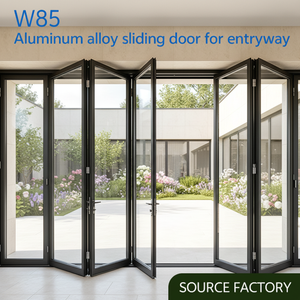
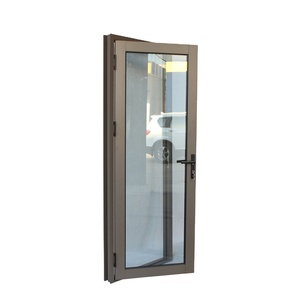
Precision-engineered extruded 6063-T5 aluminum profiles integrated with architectural security grilles, multi-point compression locks, and high-performance double tempered thermal units.
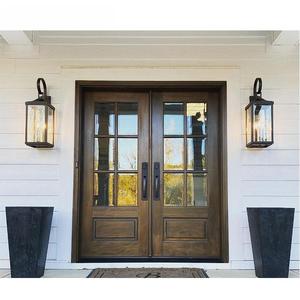
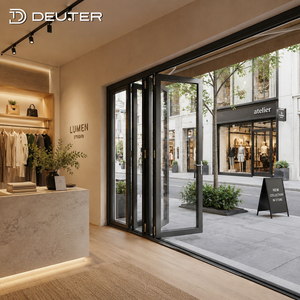
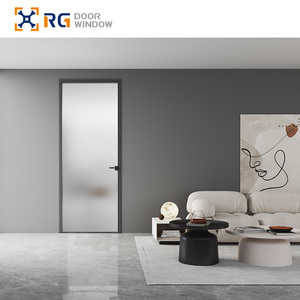
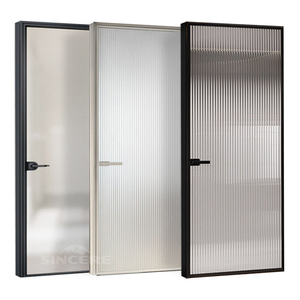
How commercial developers, Tier-1 contractors, and fenestration importers are re-evaluating supply chains for 2026–2030 to achieve ESG benchmarks and structural resilience.
Global procurement teams across Europe, Australia, and North America now demand Environmental Product Declarations (EPDs) detailing Scope 1, 2, and 3 emissions. Architectural aluminium window frames must transition from traditional high-heat coal-fired smelting to hydroelectric or recycled billet manufacturing.
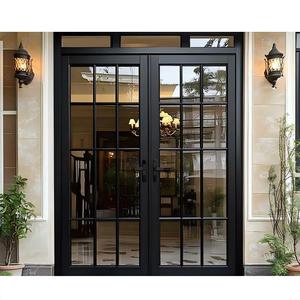
Traditional decorative window grilles are obsolete in high-value tenders. Modern architectural grilles serve an engineered structural purpose: combining hurricane projectile resistance with high-security anti-theft intrusion barriers without obstructing scenic sightlines.
Developers are eliminating high domestic job-site labor fees by sourcing fully unitized or sub-assembled grille window modules directly from Chinese export clusters. The emphasis has shifted toward zero job-site fabrication.
An engineering analysis of profile alloy mechanics, thermal barrier breakthroughs, surface molecular bonding, and security integration in modern Chinese fenestration export manufacturing.
Early-generation aluminium grille windows utilized low-strength secondary extrusions that suffered from sagging and metallurgical stress cracking under tropical coastal climates. Leading Chinese manufacturing clusters in Foshan now mandate 100% primary A00 aluminium ingots.
By enforcing 6063-T5 and structural 6061-T6 alloys with precision web wall thicknesses ranging from 1.6mm to 3.0mm, profiles exhibit tensile strengths exceeding 205 MPa. Grille intersections are no longer welded manually; instead, computerized CNC milling mortise-and-tenon interlocking joins eliminate heat-affected zone (HAZ) oxidation and ensure microscopic tolerances.
The traditional vulnerability of window grilles lay in thermal bridging—the internal aluminium grid acted as a conductor, leading to interior condensation and microbial mold growth in humid air-conditioned rooms (Singapore, Florida, Gulf States).
Current high-end architectural grille windows employ Iso-baric multi-chamber thermal breaks. By decoupling external and internal sash chambers with 24mm–34mm PA66 nylon reinforced with 25% fiberglass, the thermal conduction bridge is completely severed. Grille patterns can now be positioned externally, integrated into the insulating airspace (Between-The-Glass Grilles / GBG), or mechanically interlocked onto the external glazing stops without penetrating the conditioned thermal core.
In high-salinity marine zones and intense ultraviolet deserts (Saudi Arabia, Australia, Caribbean), surface degradation has historically caused paint chalking, flaking, and filiform corrosion around grille joints within 36 months.
China's Tier-1 export lines utilize automated 3-coat/2-bake electrostatic PVDF coating systems with Kynar 500® or Hylar 5000® resins meeting AAMA 2605 criteria. This creates a hyper-inert fluoropolymer barrier resistant to 4,000-hour neutral salt spray tests and extreme acid rain. Alternatively, Class 1 architectural anodizing (25-micron anodic oxide depth) yields surface harness values comparable to sapphire, resisting scratching and airborne desert sand abrasion.
Primary aluminium billets homogenized at 540°C, precision extruded and heat-treated to T5/T6 Rockwell hardness.
Apertures, drainage weep holes, and interlocked grille pockets cut with sub-millimeter repeatable accuracy.
Dual-sealed insulated glass units (IGU) filled with 90% Argon gas, fitted with warm-edge composite spacers.
Tested for air infiltration (ASTM E283), water resistance (ASTM E331), and packed in fumigated plywood crates.
Guangdong Dejiyoupin Doors and Windows Co., Ltd. (DERCHI) leads China's fenestration export industry through industrial scale, proprietary engineering patents, and global compliance testing.
DERCHI holds the exclusive invention patent for the Four-Side Six-Point Locking architecture. Unlike standard casement handles that lock on a single jamb, our multi-axial drive rods throw hardened steel mushroom cams into all four perimeter extrusions simultaneously, transforming grille windows into impenetrable anti-jemmy barriers.
Our product assemblies undergo accredited third-party mechanical and thermal testing. We hold North American NFRC and CSA listings, European CE compliance, Australian AS2047 fenestration standards, ISO 9001 certified continuous auditing, and verified TAS 201/202/203 high-velocity hurricane impact certifications.
Located in Shishan Town, Nanhai District, Foshan, DERCHI operates in the direct nexus of global marine shipping routes. Proximity to Guangzhou, Shenzhen, and Hong Kong ports guarantees compressed maritime lead times, cost-effective container staging, and responsive prototype sample dispatch via international air cargo.
Detailed technical answers to common queries raised by general contractors, facade engineers, procurement directors, and import distributors.
We supply three distinct architectural configurations: 1) Internal Grilles (GBG - Grilles Between Glass), installed hermetically within the sealed Argon-filled space between double or triple panes, preventing dust collection; 2) Simulated Divided Lites (SDL), where extruded aluminium bars are chemically adhered to exterior and interior glass surfaces with spacer bars between the glass to mimic authentic multi-pane fenestration; and 3) Monolithic High-Security Heavy Grilles, mechanically fixed to the inner or outer perimeter extrusion frame with concealed tamper-proof screws.
Standard frames use virgin 6063-T5 or structural 6061-T6 aluminum. For regions subject to building energy regulations (IECC, Title 24, NCC Australia, EN ISO 10077), we integrate 24mm to 34mm German-engineered Technoform PA66 GF25 polyimide thermal strut barriers. These achieve system U-factors down to 0.24 BTU/hr·ft²·°F (1.36 W/m²K) when paired with soft-coat Low-E argon-filled IGUs.
For coastal and marine exposure within 5 km of saltwater bodies, we recommend our AAMA 2605-compliant PVDF coatings (polyvinylidene fluoride fluoropolymer) or 25-micron anodic coatings. In addition, all internal screws, hinges, and transmission rods are fabricated from austenitic 304 or 316 marine-grade stainless steel to prevent galvanic corrosion between aluminum profiles and iron hardware.
Standard fabrication takes 25 to 35 business days following formal shop drawing approval and color chip confirmation. For transit protection, windows and grille frames are wrapped in non-marking protective film, corner-guarded with high-density EPE foam cushions, and enclosed in heat-treated, fumigated ISPM-15 plywood crates. Crates feature bottom forklift skids and top hoist lugs for safe project site staging.
Yes. Our in-house R&D engineering division of 30+ specialists provides comprehensive structural structural calculations (Mullion Moment of Inertia - Ixx/Iyy) tailored to your building height, terrain category, and local design wind pressure (Pa / PSF). We provide structural engineering reports verifying allowable glass deflection (L/175 or L/240) to satisfy municipal building envelope permits.
Our minimum order quantity is adaptable: for custom residential villa projects, we accept single container consolidation orders (approx. 50 m²), while our automated lines support commercial tower packages exceeding 10,000 m². We provide an industry-backed 10-year warranty on aluminum profile structural stability and surface PVDF coatings, alongside a 5-year warranty on insulated glass edge seal hermeticity and hardware mechanics.
Connect with our technical estimating division in Foshan. Send your window schedules, architectural elevations, and performance specifications for an itemized factory direct quotation and shop-drawing feasibility analysis within 24 business hours.