Featured OEM Aluminum Window & Glazing Systems
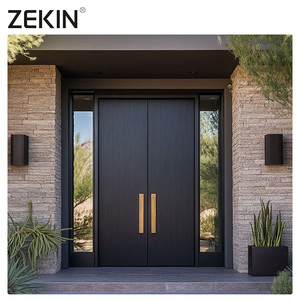
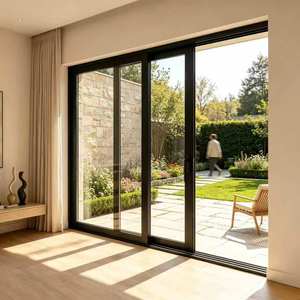
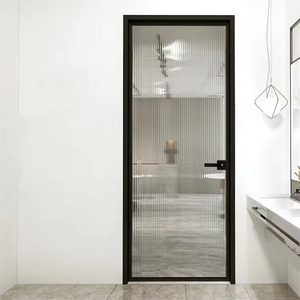
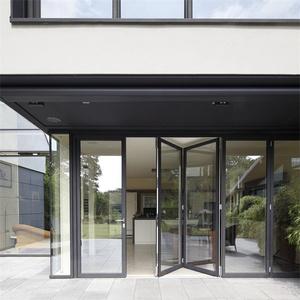
Engineered in Foshan with rigorous thermal break tolerances, multipoint locking perimeter seals, and heavy-duty structural profiles. Each product is custom tailored for architectural villas, luxury multi-family apartments, commercial hospitality complexes, and coastal typhoon-prone developments.
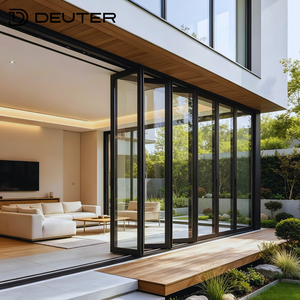
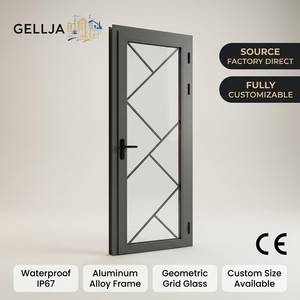
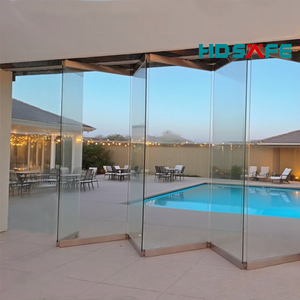
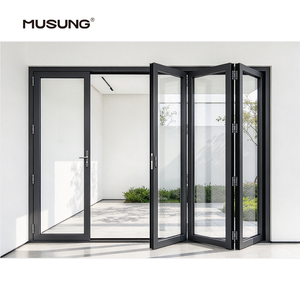
Why Major Developers & Project Specifiers Choose DERCHI
Backed by Guangdong Dejiyoupin Doors and Windows Co., Ltd.'s 25+ years of fenestration excellence, our integrated engineering infrastructure bridges the gap between architectural concept drawings and site-tested high performance.
Proprietary Security Engineering
We hold more than 100 independent patents, including our industry-acclaimed Four-Side Six-Point perimeter lock system. Engineered to resist mechanical jemmying, forced entry, and extreme gale torsional strain, this system protects coastal villas and urban commercial assets alike.
360° Intelligent CNC Fabrication
Our Foshan headquarters utilizes digital machining centers providing continuous tolerances within 0.1mm. Integrated mitre gluing, corner crimping, and EPDM pressure gasketing eliminate thermal leakage points, water penetrations, and air infiltration before packaging.
Turnkey 8-Step OEM Management
From architectural shop drawing verification, structural calculation analysis, and extrusions to finish anodizing, IG unit argon filling, and container consolidation, our end-to-end process guarantees timely project schedules and eliminates costly on-site sizing adjustments.
Future Procurement Trends in Architectural Fenestration
Navigating the evolving technical standards and commercial dynamics within the international façade and fenestration sectors. Structural engineers, cost managers, and commercial developers are prioritizing comprehensive performance verification over bare product costs.
1. Total Cost of Ownership (TCO) Prioritization
International procurement contracts are turning away from short-term unit price assessments. Forward-thinking developers prioritize whole-lifecycle building energy performance. High-performance polyamide 66 thermal breaks paired with high-spec low-emissivity (Low-E) double or triple glazing lower building HVAC operating costs by up to 34%, ensuring rapid payback in commercial hospitality and multi-tenant residential developments.
2. Stringent Regional Code Auditing
Export compliance requires independent third-party laboratory verification. Buyers in Australasia must mandate strict AS2047 / AS1288 acoustic and structural compliance; European contractors require CE / EN 14351-1 declarations; North American developers insist on NFRC thermal ratings and CSA / ASTM hurricane cyclic impact tests. Working with certified manufacturers mitigates project delay and customs clearance rejections.
3. Integrated Supply Chain Consolidation
Managing multiple disparate suppliers for sliding doors, architectural casements, entry security doors, and glass sunrooms creates installation and aesthetic coordination challenges. Leading general contractors now partner with integrated factories capable of providing unified surface coating finishes (Qualicoat-certified fluorocarbon/powder coating), identical extrusion alloy batches (6063-T5/T6), and synchronized site delivery.
Technological Evolution & Design Horizons in Aluminum Fenestration
The intersection of structural metallurgy, smart automation, and zero-carbon building directives is revolutionizing modern fenestration engineering.
Minimalist Sightlines
Architectural trends favor ultra-slim interlocks (down to 20mm sightlines) paired with concealed sub-frames embedded flush within the structural floor slab. Structural stability is maintained through deeper extrusion web profiles and reinforced composite internal stiffeners capable of carrying single glass panel loads exceeding 500kg.
Passive House Thermal Break
To fulfill strict net-zero carbon building codes worldwide, profile design incorporates multi-chambered polyamide insulation strips (PA66 GF25) filled with aerogel or high-density insulating foam cores. Combined with triple-pane double-low-E argon glazing, full frame U-values reach passive house standards (Uw < 0.8 W/m²·K).
Integrated Smart Actuation
Modern commercial developments demand silent hidden drive motors, concealed wind/rain sensors, and automated smoke-evacuation systems linked directly with central Building Management Systems (BMS). DERCHI systems facilitate fully concealed hardware integrations with touch-panel and remote smartphone controls.
Extreme Climate Resilience
With escalating meteorological volatility, windows and doors require verified durability against wind loads up to 5000 Pa (equivalent to Category 5 typhoons) and salt-fog corrosion resistance (exceeding 2,000 hours of neutral salt spray testing) tailored specifically for open oceanfront resorts.
Frequently Asked Procurement & Engineering Questions
Expert guidance on structural certification, thermal calibration, container logistics, and factory customization direct from our technical team.
We utilize primary architectural-grade 6063-T5 or 6063-T6 aluminum billet extrusions with certified wall thicknesses ranging from 1.4mm to 3.0mm, fully compliant with structural ASTM and AS/NZS codes. For thermal performance, we utilize imported Technoform or high-performance PA66 GF25 (25% glass fiber reinforced polyamide) multi-cavity thermal break bars. This configuration prevents structural frame expansion, minimizes condensation risk in humid environments, and delivers optimal thermal decoupling.
Our products are tested in accredited multi-axis testing chambers evaluating air permeability (ASTM E283), static and dynamic water penetration resistance (ASTM E331 / AAMA 501.1), and uniform structural load deflection (ASTM E330). For extreme typhoon corridors such as the Philippines, Florida, the Caribbean, and coastal Japan, we integrate structural DuPont SentryGlas (SGP) or high-grade PVB laminated glass panels coupled with multi-point locking mortise systems and continuous vulcanized EPDM gasketing capable of withstanding pressures upwards of 4.5 kPa.
Yes. Our engineering division operates a dedicated 30+ member R&D and shop-drawing department. We convert client architectural schematics, elevation schedules, and BIM/CAD models into detailed shop drawings showing mullion details, anchoring brackets, perimeter flashing interfaces, and thermal breaks. For multi-tower, high-rise, or phased hospitality construction projects, we organize batch production, tagging each crate by building, floor, and opening number to align with the general contractor’s site installation sequence.
Damage prevention in transoceanic freight is critical. Our export packing process includes: (1) protective polyfilm wrapped around each profile, (2) shock-absorbing high-density corner guards, (3) waterproof shrink wrap, and (4) ISPM-15 certified fumigated solid plywood crates or heavy-duty steel transport racks. Crates are loaded with moisture-absorbing desiccants and secured in containers with heavy-duty polyester strapping and timber dunnage to eliminate transit shifting.
We offer architectural finishes certified by Qualicoat, AAMA 2604, and AAMA 2605 specifications. This includes 2-coat and 3-coat fluoropolymer (PVDF) wet spray finishes with a 20- to 30-year guarantee against chalking, fading, and peeling under intense UV exposure. For coastal salt-spray conditions, we offer class-1 architectural anodizing (minimum 25-micron thickness) and marine-grade AkzoNobel powder coatings backed by third-party testing.
Transform Your Architectural Vision Into Precision Reality
Whether you require hurricane-rated balcony sliding doors for a coastal resort, minimalist thermal-break casements for a luxury villa development, or custom-engineered curtain wall façades, our engineering team is ready to analyze your window schedule and provide full technical costing.
Inquire Now