Featured Heavy-Duty Aluminium & Glazed Systems for Afghan Developments
Specially manufactured to withstand severe alpine winters, blistering summer desert heat, high UV radiation, and heavy fine-sand particulate infiltration across Afghanistan.
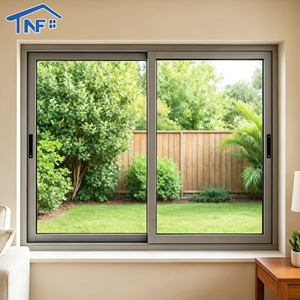
Hurricane Impact Aluminum Windows Double Glass Sliding Window Aluminium Sliding Windows for Houses Kitchen Bedroom Living Room
- Heavy 6063-T5 extruded profile alloy
- Multi-cavity dust-blocking nylon tracks
- High acoustic attenuation rating (Rw > 38dB)
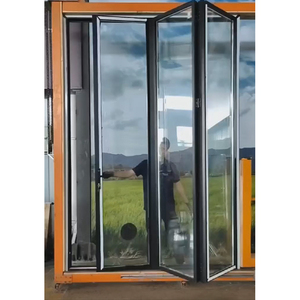
CHANGYI USA Hurricane Impact Aluminum Triple Glass Accordion Doors Outdoor Bi Folding Door Plegables
- Reinforced folding structural hinges
- Triple-pane thermal break isolation
- Engineered for grand courtyard facades
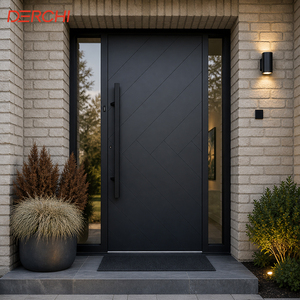
Aluminum Entrance Door Soundproof Thermal Break Aluminum Front Door Exterior Security Door Custom
- Exclusive 6-point perimeter deadbolt system
- PA66GF25 structural thermal insulator
- Integrated acrylic / armor vision panel options
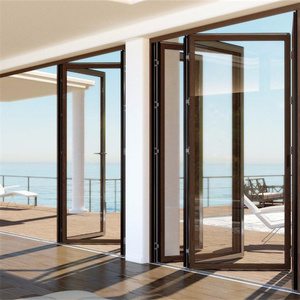
TOMA Customized Waterproof Exterior Aluminum Glass Bifold Patio Sliding Bi Folding Door
- EPDM continuous vulcanized compression seals
- Heavy-duty load-bearing stainless rollers
- Resists high wind gust pressures (2500 Pa)
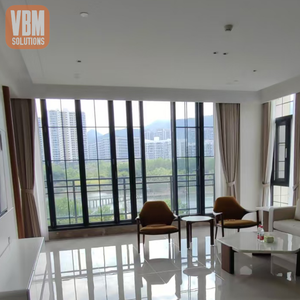
Residential Exterior Aluminum Concertina Doors Double Glass Folding Patio Door for Balcony
- Flush threshold with integrated sub-drainage
- Dual acrylic or tempered glazing channels
- UV-resistant AkzoNobel powder coating
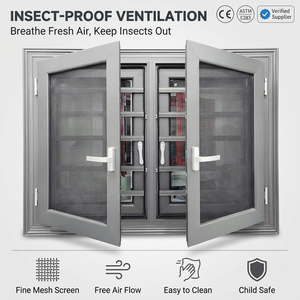
Window Aluminum windows and Doors for Houses Big Sliding Skylight with Armored Glass Aluminium Awning Double Glazed Fenetre
- Reinforced structural mullions for tall apertures
- Multi-point compression sash locks
- High solar heat rejection (SHGC < 0.28)
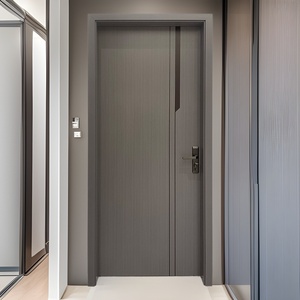
Foshan Aluminum Alloy Anti-Theft Bedroom Door Household Soundproof Environmentally Friendly All-Aluminum Interior Study Door
- Aviation-grade aluminum honeycomb infill
- Impact-modified frosted acrylic panels
- Zero-formaldehyde fire-retardant finish
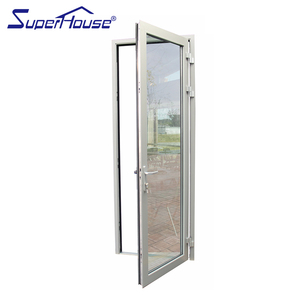
NFRC NOA FPA Approved Customized Hurricane Impact Aluminum Casement Windows and Hinged Doors Residential Balcony Design
- International NFRC & CE compliance tested
- Aviation-grade alloy wall thickness (> 2.0mm)
- Full perimeter airtight rubberized baffles
Aluminium-Acrylic Fenestration Engineering for Afghanistan’s Infrastructure
Civil reconstruction projects, luxury private compounds, municipal facilities, and commercial hubs in Kabul, Balkh, Herat, and Nangarhar encounter severe environmental stressors that render standard fenestration obsolete within years. Our export systems pair metallurgical precision with advanced polymer optics.
Alloy 6063-T5/T6 Structural Core
Our extrusions employ high-purity virgin aluminum billet with yield strengths exceeding 170 MPa. Designed with wall thicknesses between 1.8mm and 3.0mm, these systems resist intense windward deflection along mountain passes while maintaining rigid alignment across multi-meter door leafs.
Optical-Grade Cast PMMA Acrylic
Poly-methyl methacrylate (PMMA) infill panels provide 17 times the impact resistance of annealed silicate glass at half the structural weight. Specially treated with cross-linked UV stabilizers, our panels avoid solar yellowing and surface crazing despite Afghanistan's extreme ultraviolet index.
Polyamide PA66GF25 Thermal Breaks
Glass-fiber reinforced polyamide isolators break structural thermal conductance. This thermal barrier drops frame U-values below 1.6 W/m²·K, preventing severe condensation and frost bridging during freezing Kabul winters while slashing commercial air-conditioning loads in midsummer.
Triple-Barrier Dust & Silt Seals
The "Wind of 120 Days" (Bad-i-Sad-o-Bist Roz) creates high airborne concentrations of abrasive silt in Western Afghanistan. Our door units utilize dual-density co-extruded EPDM continuous perimeter gaskets with finned pile weatherstripping to halt microscopic dust penetration completely.
Multi-Point Perimeter Deadbolts
Security is non-negotiable for administrative and residential structures. Integrating DERCHI’s patented Four-Side Six-Point locking mechanics, each sash locks simultaneously into top, bottom, and lateral jamb channels using anti-saw hardened manganese steel pins.
Electrostatic & PVDF Finishes
Exposed profile surfaces are finished with Qualicoat Class 2 certified architectural powder coats or fluoropolymer PVDF coatings exceeding 60 microns. This barrier resists continuous salt-alkali wind abrasion, surface scratching, and cyclical thermal expansion from -25°C to +50°C.
| Performance Criterion | DERCHI Heavy Aluminium Series | Standard Commercial Afghan Imports | Compliance Test Benchmark |
|---|---|---|---|
| Aluminium Alloy Specification | Primary Billet 6063-T6 (Tensile > 205 MPa) | Recycled Scraps Alloy (< 130 MPa) | ASTM B221 / GB/T 5237 |
| Thermal Transmittance (U-Value) | 1.4 - 1.8 W/m²·K (With PA66GF25 Barrier) | 3.8 - 5.2 W/m²·K (Non-thermal conductive) | ISO 10077-2 / EN 12567-1 |
| Infill Optical & Impact Rating | Cast PMMA Acrylic / Polycarbonate Composite | Low-grade soda-lime float glass (Unsafe) | EN 356 (P4A) / ASTM D1003 |
| Sandstorm Air Permeability | Class 4 (Tight Positive Seal < 0.5 m³/h·m) | Class 1 (Drafty / Heavy Dust Seepage) | EN 12207 / AS 2047 |
| Locking Security Resistance | Patented 4-Side 6-Point Multi-Lock | Single-point latch (Vulnerable to prying) | PAS 24 / RC2 European Security |
| Acoustic Isolation (Rw) | Rw = 36 dB to 44 dB | Rw < 24 dB | ISO 717-1 |
Engineering For Afghanistan’s Varied Topography & Microclimates
Different provinces present contrasting engineering challenges. Our fenestration systems are configured according to local altitude, diurnal thermal swings, and architectural archetypes.
High Altitude Freeze-Thaw
Kabul sits at 1,790 meters altitude where winter temperatures plummet to -15°C while solar radiation remains intense. Systems feature multi-chamber thermal isolators that prevent condensation pooling, thermal profile stress cracking, and acoustic pollution across metropolitan districts like Wazir Akbar Khan and Shahr-e Naw.
Abrasive Gale Defense
The infamous 120-day high-velocity desert winds subject facades to sustained gale-force grit. We specify reinforced acrylic panels that resist shatter hazards from airborne debris, coupled with brush-free vulcanized EPDM seal chambers that prevent sand particles from locking internal roller bearings.
Extreme Solar Heat Gain
Southern regions experience ambient summer peaks exceeding 45°C. Systems incorporate double-glazed solar-reflective acrylic or spectrally selective Low-E insulated glass. These layers reflect radiant infrared energy while preserving indoor cooling loads for private villa complexes and logistics terminals.
Commercial Hub Logistics
As the trade nexus with Central Asia through Hairatan, Northern projects demand high-turnover institutional durability. Heavy-duty pivot entrance systems and sliding doors with stainless steel tracks provide zero-jam performance under constant commercial and industrial traffic.
Current Sourcing & Fenestration Trends in Afghan Construction
The architectural landscape in Afghanistan is shifting rapidly from makeshift site-fabricated frames to factory-engineered architectural systems with documented technical certifications.
Privacy-Preserving Acrylic Paneling
Traditional Afghan cultural architecture places prime importance on personal privacy (Mahramiyat). Translucent, frosted, and patterned cast acrylic door elements are replacing outdated wooden screens. They maximize diffuse natural illumination inside family quarters without compromising external visual obscurity.
Energy Cost Reduction Mandates
With electrical grid reliability varying and diesel generation costs high, developers of commercial plazas and hospitals cannot afford thermal energy bleed. High-performance thermal-break aluminum doors and double-glazed units offer paybacks in heating/cooling efficiency within 24 months.
Prefabricated Turnkey Imports
Due to local raw metal shortages and a scarcity of precision tooling in domestic workshops, major contractors in Kabul and Herat are purchasing completely knock-down (CKD) or pre-assembled systems directly from certified Chinese manufacturers, guaranteeing factory tolerances.
Secured Transport Corridors: Foshan Factory to Afghan Job Sites
Shipping high-precision glazed aluminium fenestration to a landlocked destination requires hardened crating protocols and proven logistics pathways to bypass severe mountain highway vibration and customs hold-ups.
Foshan Factory Dispatch
Finished frames and acrylic panels undergo 360-degree quality inspections, barcoded indexing, protective PE film wrap, shock-absorbent corner protectors, and sealed fumigated timber case crating.
Southern Maritime Route
Ocean freight routes from Pearl River Delta ports (Nansha/Shekou) to Port of Karachi or Port Qasim, Pakistan. Goods transfer under Afghan Transit Trade (ATT) customs bond agreements.
Overland Frontier Crossings
Containerized truck convoys transit via Torkham border crossing for Eastern/Kabul deliveries, or Spin Boldak for Southern Kandahar distribution, with complete consular and commercial documentation.
Northern Rail/Road Variant
Alternative intermodal transit via Central Asia (China-Kyrgyzstan-Uzbekistan corridor) terminating at the Hairatan rail dry port, facilitating direct distribution to Mazar-i-Sharif and Kunduz.
Guangdong Dejiyoupin Doors & Windows (DERCHI)
Headquartered in Nanhai District, Foshan—the global center of aluminum profile extrusion and architectural hardware engineering—DERCHI has dedicated over 25 years to manufacturing top-tier architectural systems for developers, contractors, and building material suppliers worldwide.
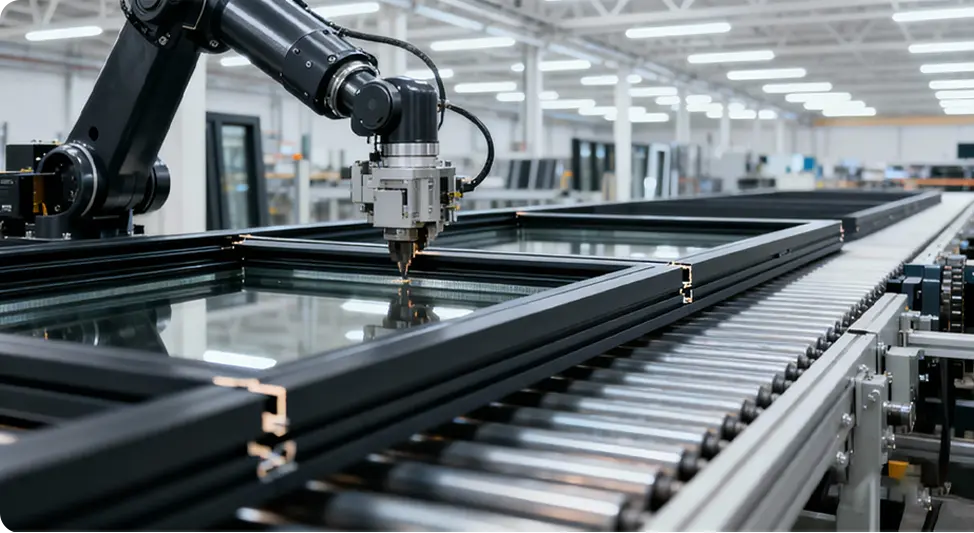
With an ultra-modern 180,000 m² industrial production campus, our robotic precision cutting, CNC corner crimping, and automated insulating glazing lines ensure absolute geometric accuracy according to approved architectural shop drawings.
For Afghan project developers, we offer end-to-end engineering support: structural wind-load simulations, thermal profile calculations, bespoke color matching (AkzoNobel & Tiger coatings), and complete installation guidance documentation.
Frequently Asked Questions by Afghan Contractors & Specifiers
Clear, definitive technical guidance addressing cross-border procurement, environmental longevity, and hardware reliability.
Will acrylic glazing degrade, yellow, or crack under Afghanistan’s intense UV?
No. Standard commercial polystyrene panels yellow rapidly; however, DERCHI exclusively uses optical-grade cast PMMA acrylic treated with cross-linked benzotriazole UV stabilizers. It is guaranteed against measurable yellowing (Delta YI < 2) and tensile embrittlement for over 15 years in high-altitude environments like Kabul.
How do your sliding door tracks prevent jamming from fine sand particles?
Our sliding tracks integrate elevated stainless steel monorails combined with self-cleaning brush seals and downward-sloped debris drainage channels. Airborne silt brought by seasonal winds is automatically swept aside during sash travel, preventing roller seizure.
Can you customize profiles based on our architectural elevation drawings?
Yes. Our engineering division follows an 8-stage CAD/BIM review protocol. We take your architectural blueprints and calculate wind load resistances, threshold clearances, thermal breaks, and structural anchorage layouts before submitting comprehensive shop drawings for client sign-off.
What is the standard production and shipping lead time to Afghanistan?
Manufacturing custom door orders takes approximately 20 to 30 days depending on profile finish and glass/acrylic specifications. Maritime transit from Foshan (via Nansha/Shekou) to Karachi takes 14 to 18 days, followed by 7 to 10 days for bonded overland cross-border trucking to Kabul or Kandahar.
How do you safeguard aluminum surfaces and glass against transit damage?
All aluminum extrusions are wrapped in peelable low-tack protective polymer films, cushioned with edge protectors, bundled with moisture desiccants, and packed in reinforced, fully enclosed plywood crates built to withstand transshipment across steep mountain passes.
What payment mechanisms are accommodated for Afghan trade orders?
We work with international commercial banking networks accommodating confirmed Letters of Credit (L/C at sight), telegraphic transfers (T/T with staged milestones), and third-party escrow arrangements established through regional commercial hubs such as Dubai (UAE) or Istanbul (Turkey).
Ready to Engineer Your Architectural Project in Afghanistan?
Send your project blueprints, window/door schedules, or bill of quantities directly to our senior structural engineering team. Receive comprehensive CAD shop proposals, thermal performance evaluations, and delivered container estimates within 24 hours.