Featured Architectural Systems Specified for Jordanian Developments
Tailored for high-end residential compounds in Amman, luxury tourist resorts in Aqaba and the Dead Sea, and commercial developments across Zarqa and Irbid. Direct factory-engineered precision from Foshan.
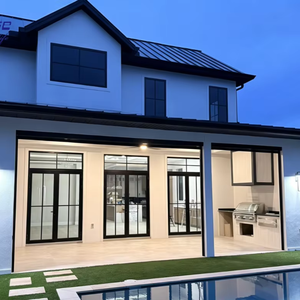
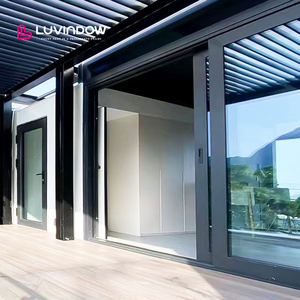
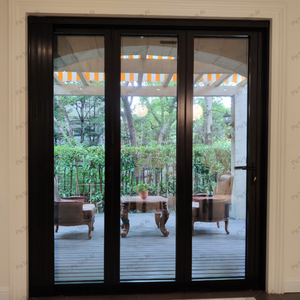
Fenestration Engineering for the Jordanian Climate & Regulatory Environment
Procuring architectural aluminium fenestration for Jordan requires rigorous mitigation against intense solar radiation, extreme diurnal temperature variations, and fine-grain desert sand particulate ingress. Standard commercial systems fail prematurely under these localized stress vectors.
Thermal Envelope & Solar Load
Jordan experiences extreme solar irradiances exceeding 2,100 kWh/m² annually. Our heavy-duty architectural profiles integrate polyamide PA66 GF25 thermal breaks up to 34mm wide, decoupling exterior profile surface heats of 65°C from internal air-conditioned living spaces. Coupled with dual-chamber argon-filled Low-E insulated glass units (IGU), our assemblies achieve whole-system U-values as low as 1.4 W/m²·K, compliant with the Jordan National Building Code (JBC 301 Thermal Insulation).
Khamaseen Sand & Dust Ingress
During spring and seasonal transitions, the Khamaseen wind drives microscopic desert sand particles across the Levant at sustained speeds up to 80 km/h. Standard brush weatherstripping allows particulate penetration, resulting in roller seizure and acoustic degradation. DERCHI systems feature multi-lip vulcanized EPDM continuous gaskets with multi-point pneumatic compression locks, attaining Class 4 EN 12207 airtightness ratings to prevent desert dust penetration.
Structural Wind Load Resilience
West Amman districts such as Dabouq, Abdoun, and Khalda sit at elevations between 900m and 1,100m above sea level, exposed to severe winter gales and valley winds. Our heavy-wall 6063-T6 aluminum extrusions (profile thickness 2.0mm to 3.0mm) are engineered for design wind loads exceeding 2.5 kPa (P3 deflection limits), ensuring deflection safety across floor-to-ceiling oversized sliding panoramic openings without glass rattles or frame deflection.
Fenestration Specification Matrix: Conventional Market vs. DERCHI Jordan Engineering Standards
A quantitative breakdown showing how engineered thermal breaks, alloy tempering, and multi-point locking elevate building lifecycle performance across Jordanian projects.
| Performance Indicator | Common Local Market Imports | DERCHI Engineered System for Jordan | Compliance Reference / Test Protocol |
|---|---|---|---|
| Aluminium Alloy & Temper | Recycled billet 6063-T5 (Wall 1.2–1.4mm) | Virgin 6063-T6 Architectural Grade (Wall 2.0–3.0mm) | ASTM B221 / EN 755-9 Precision Extrusion |
| Thermal Transmittance (Uf) | Non-Thermal or 14mm PVC strip (Uf > 3.8 W/m²K) | 24mm–34mm PA66 GF25 Polyamide (Uf 1.6–2.1 W/m²K) | ISO 10077-2 / JBC 301 Energy Code |
| Glass Configuration | Single 6mm or Clear 5+6A+5 Double Glazed | 6mm Low-E + 16Ar + 6mm Laminated Double Glazed | EN 1279 / ASTM C1036 / NFRC 100 |
| Solar Heat Gain Coefficient (SHGC) | 0.65 – 0.78 (Severe interior greenhouse effect) | 0.22 – 0.32 (High-efficiency solar selective coating) | NFRC 200 / ASHRAE 90.1 Compliance |
| Airtightness (Dust Prevention) | Class 2 (Permeable to fine Khamaseen silt) | Class 4 (Hermetic continuous multi-point compression) | EN 12207 / BS 6375-1 |
| Corrosion Resistance Rating | Standard Anodized 10–15 microns (Fades in 3 years) | Qualicoat Class 2 Super-durable PVDF / Anodized 25μm | Qualicoat / AAMA 2605 / 3,000hr Salt Spray Test |
| Acoustic Attenuation (Rw / STC) | Rw 25–28 dB (High city & highway noise ingress) | Rw 38–46 dB (Acoustic PVB lamination + warm-edge) | ISO 717-1 / ASTM E413 Acoustic Ratings |
Localized Application Scenarios Throughout the Hashemite Kingdom
Jordan represents one of the world's most geographically and climatically diverse micro-zones within a compact footprint. From sub-zero winter frost in the Ajloun highlands to the -430m barometric depression of the Dead Sea, our systems are pre-engineered for local conditions.
Luxury Mansions & Commercial Towers
Districts: Abdoun, Dabouq, Um Uthaina, Al-Abdali Urban Boulevard.
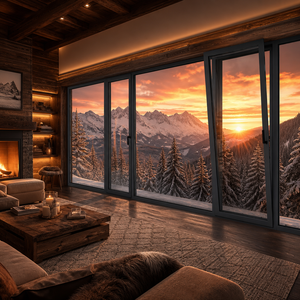
- Large-span sliding doors up to 3.5m height to maximize panorama views across rolling limestone hills.
- Acoustic decoupling systems suppressing dense vehicular traffic noise from Zahran and Mecca Streets.
- High thermal insulation resisting freezing winter valley drafts and high summer irradiance.
- Seamless aesthetic pairing with traditional Ma'an white stone and Ajloun stone exterior façades.
Resorts, Harbors & ASEZA Free Zone
Districts: Tala Bay, Ayla Oasis, South Beach luxury hospitality developments.
- Marine-grade fluorocarbon (PVDF) 3-coat surface finishes resisting chlorine and saltwater vapor.
- 316 austenitic stainless steel roller bearings, tracks, and fasteners preventing seaside pitting.
- Heavy-duty lift-and-slide patio doors engineered for open poolside seamless indoor-outdoor living.
- Optimized clearance documentation for direct import processing through Aqaba Container Terminal (ACT).
Eco-Wellness Resorts & Private Retreats
Districts: Sweimeh, Ghor Al-Safi, Dead Sea hotel strips.
- Engineered barometric pressure relief valves in sealed IGUs preventing glass implosion below sea level.
- Ultra-high UV-reflective coatings resisting ambient summer heats consistently topping 46°C.
- Hyper-saline mist protection using customized EPDM Santoprene dual-durometer compression barriers.
- Heavy structural profiles built to resist rapid temperature fluctuations between day and night.
High-Density Residential & Education
Districts: New Irbid residential complexes, Zarqa urban developments, Mafraq industrial parks.
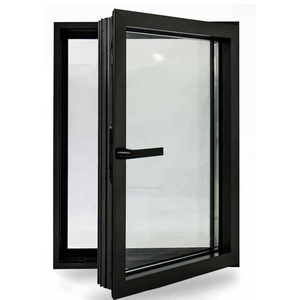
- Tilt-and-turn casement windows delivering secure micro-ventilation without sash rattling.
- Cost-effective thermal break configurations offering rapid payback against rising municipal electricity bills.
- Heavy-duty insect and sand protection screens using tear-resistant coated fiberglass mesh.
- High-capacity cycle testing (over 100,000 sliding cycles) for educational and high-occupancy buildings.
Architectural Fenestration Trends Shaping the Jordanian Market
The Jordanian architectural landscape is transitioning rapidly from heavy, bulky, non-insulated windows toward high-performance, minimalist, energy-conscious building envelopes.
1. Minimalist Slim-Sightline Sliding Systems
Jordanian villa designers are increasingly adopting European-style ultra-slim interlocking stiles (20mm to 30mm visible sightlines). This architectural shift requires structural profiles with exceptionally high moments of inertia (Ix > 120 cm⁴) to withstand horizontal wind loads while maximizing daylight and framing unobstructed views of Amman's dramatic topography.
2. Stringent Energy Codes Driven by High Electricity Tariffs
Because Jordan imports a substantial share of its energy, retail and commercial electrical tariffs are among the highest in the Levant. As a result, MEP engineers and developers prioritize fenestration with verified low SHGC ratings (under 0.28) and warm-edge insulated glass to slash ongoing HVAC chiller loads by up to 35% in large villa projects.
3. Harmonization with Jordanian Limestone Façades
Local municipal regulations across Amman dictate natural stone cladding for multi-story residential and commercial buildings. Leading architects demand custom fluorocarbon coatings matching specific stone tones—including Warm Sandstone, Charcoal Anthracite, and Bronze Anodized textures—ensuring fenestration frames complement natural stone masonry seamlessly.
Why Jordanian Developers & Contractors Trust DERCHI
Operating from our 180,000 m² automated manufacturing facility in Foshan, China—the capital of global architectural aluminum extrusion—Guangdong Dejiyoupin Doors and Windows Co., Ltd. delivers institutional-grade fenestration with verifiable international certifications (CE, NFRC, AS2047, CSA, ISO 9001, and Hurricane High-Wind Impact).
Our Rigorous 8-Step Overseas Engineering Methodology
Every international project export follows a strictly audited engineering path, ensuring complete alignment from the structural engineer's CAD elevations to on-site installation guidance in Jordan.
Architectural Review
In-depth analysis of architectural elevations, structural wind calcs, and opening schedules provided by your consulting engineer.
System Optimization
Matching thermal break dimensions, alloy gauge, and glass builds to Jordan's specific climatic exposure and seismic zone.
Technical BOQ Costing
Transparent, line-by-line commercial and technical proposal including precise glass build-ups, hardware sets, and export packaging.
Bilingual Shop Drawings
Detailed CAD submittals showing 1:1 cross-sections, drainage pathways, anchoring details, and stone perimeter reveals for client approval.
Secure Order Scheduling
Order placement with prioritized scheduling in our intelligent production lines, supported by audited raw materials traceability.
Tolerance Verification
Digital review of on-site finished opening dimensions (rough openings) to eliminate site modification risks during stone cladding.
360° QC Manufacturing
CNC precision mitering, thermal break crimping, corner corner-cleat crimping, and proprietary Four-Side Six-Point lock integration.
Export Logistics & Guide
Heavy fumigated A-frame timber crating, sea freight to Aqaba Port (ACT), plus comprehensive video and PDF installation submittals.
Frequently Asked Questions for Jordanian Importers & Contractors
Clear, technically detailed answers covering regulatory standards, customs clearance via Aqaba, and engineering safeguards for high-end residential and commercial projects in Jordan.