High-Performance Aluminum Doors for Nepalese Interior & Transition Architecture
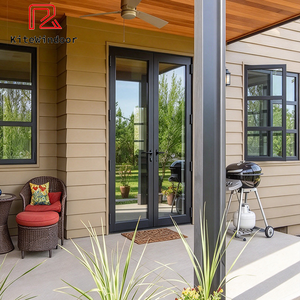
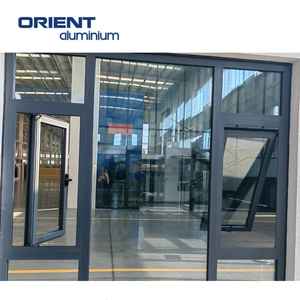
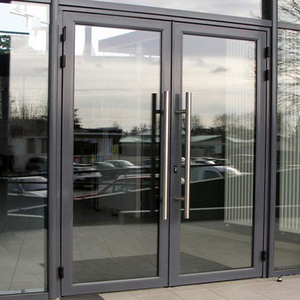
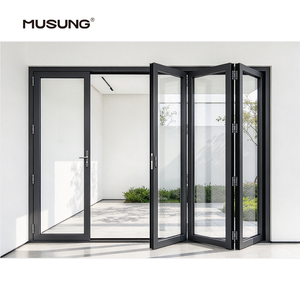
Manufactured under intelligent production protocols in Foshan, China. These 8 featured architectural models bridge precision thermal insulation, acoustic dampening, and moisture resilience engineered specifically for high-altitude valley topographies and subtropical luxury developments.
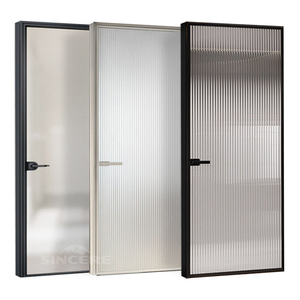
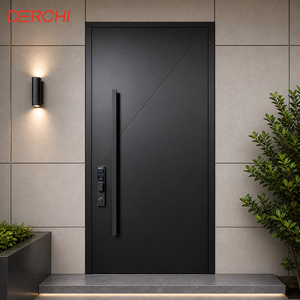
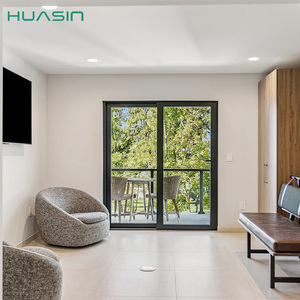
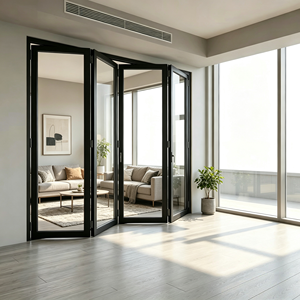
Engineering Solutions for Nepal's Unique Architectural Challenges
Nepal’s commercial and residential developers operate in one of South Asia’s most demanding architectural contexts: dense mountain valleys prone to high airborne particulate matter (PM2.5), intense seismic activity along the Main Himalayan Thrust (MHT), and extreme winter-to-summer thermal swings. Standard off-the-shelf local extrusions frequently fail within 24 to 36 months.
Kathmandu Valley High-Density Luxury Living
Projects across Jhamsikhel, Sanepa, Naxal, and Baluwatar require high-density living configurations. Internal sliding doors are used as dynamic acoustic partitions dividing dining halls, show kitchens, and private suites.
By specifying 6063-T6 aluminum alloys fitted with acoustic interlayers (PVB laminated or double-glazed tempered panes with argon infill), interior noise transfer drops below 35 dB, shielding luxury interiors from ambient urban traffic and street reverberation.
- Flush bottom tracks with zero trip hazards for elderly family members
- Concealed soft-close dampeners preventing slamming during drafts
- Dust-proof high-density nylon mohair seals keeping indoor air filtered
Pokhara & Nagarkot Hospitality Resorts
Boutique hotels and luxury mountain villas along the Phewa Lake basin and Himalayan ridge lines demand ultra-wide panoramic sightlines without compromising thermal insulation during cold alpine nights.
Our heavy-duty lift-and-slide systems accommodate glass leaf spans up to 3.2 meters high and 2.5 meters wide per sash, integrating high-load stainless steel tandem rollers that carry up to 400 kg effortlessly.
- Multi-track pocket sliding setups retracting fully into concrete recesses
- Thermal-break polyamide PA66 nylon strips eliminating condensation
- Anodized and Qualicoat-certified fluorocarbon powder coatings
Monsoon Moisture & Wet Room Isolation
During the torrential monsoon period (June to September), humidity levels in Terai lowlands (Biratnagar, Bhairahawa) and Kathmandu reach 90%+. Traditional wooden doors warp, rot, swell, and harbor black mold.
Our rust-free 1.4mm-2.0mm aluminum alloy internal bathroom and laundry sliding systems use 100% non-organic components, fluoropolymer gasket seals, and hydrophobic glass coatings that remain dimensionally stable indefinitely.
- Waterproof silicone bottom channel gutters preventing floor seepage
- Electrostatic powder finishes resisting chemical cleaner erosion
- Frosted privacy glass options with integrated micro-louvers
Seismic Interlocking & Structural Flexibility (Nepal Building Code NBC 105:2020 Compliance)
Nepal sits directly on active fault boundaries. Rigid, brittle partition systems present severe hazard risks during seismic ground motion. Our engineered sliding systems feature an anti-derailment interlocking head-track mechanism and flexible EPDM perimeter anchoring gaskets. In the event of building inter-story drift, the sliding door frame accommodates micro-flex displacements without shattering the glazing or jumping the structural rail, fulfilling the structural ductility requirements outlined in updated Nepal National Building Codes (NBC 105:2020).
Emerging Market Trends: Why Nepal Specifiers Are Shifting to Direct Foshan Sourcing
Historically dependent on localized semi-fabricated aluminum extrusion shops or trading agents operating via Kolkata, Nepal's architectural ecosystem is undergoing an aggressive structural modernization.
1. Rapid Urban High-Rise Construction
Vertical development across Kathmandu Valley, Pokhara, and Chitwan has created an urgent demand for pre-engineered, modular sliding door assemblies that can be installed rapidly without on-site wet trade delays.
Factory-assembled, CNC-machined sliding cassettes cut on-site fitting timelines by up to 65% compared to local uncalibrated profile cutting.
2. Direct Logistics Routes: Kerung & Tatopani
Direct freight routing through the Kerung/Rasuwagadhi and Tatopani/Kodari Sino-Nepal dry ports, alongside multimodal container rail via Guangzhou to Kolkata/Birgunj, offers Nepali developers lower freight tariffs and predictable 20-30 day transits.
By cutting out intermediate third-party trading syndicates, Tier-1 contractors save between 22% to 35% on total material bill of quantities (BOQ).
3. Replacement of Low-Grade Wood
Deforestation restrictions and astronomical pricing for native Sal and Teak timber in Nepal have accelerated the switch to thermal-break wood-grain coated aluminum systems. Specifiers achieve identical organic aesthetics with zero susceptibility to termite degradation, warping, or flame hazards.
| Performance Criteria | Local Nepal Fabricator (Manual Extrusions) | General Indian Import Profiles | DERCHI Foshan Precision Systems |
|---|---|---|---|
| Alloy Composition & Temper | Recycled / Mixed Ingot (Unknown Temper) | Standard 6063 Commercial Grade (T4-T5) | Virgin Ingot 6063-T6 / 6060-T6 Aircraft Grade |
| Profile Wall Thickness | 0.8 mm – 1.1 mm (Prone to bending) | 1.2 mm – 1.4 mm | 1.6 mm – 3.0 mm (Exceeds GB/T 8478 & AS2047) |
| Surface Treatment Resilience | Basic wet paint (Fades in 18 months) | Standard Anodized (10-12 microns) | AkzoNobel / PPG Powder Coating (25-Year Warranty) |
| Acoustic Attenuation (STC) | < 20 dB (Noticeable street noise leakage) | 24 – 28 dB | 36 – 45 dB (Multi-Chamber Argon Double Glass) |
| Hardware & Roller Durability | Plastic wheels (Degrades within 8,000 cycles) | Standard Zinc Alloy Bearings (20,000 cycles) | German/Siegenia Heavy-Duty Stainless Tandem (100,000+ cycles) |
Guangdong Dejiyoupin Doors and Windows Co., Ltd. (DERCHI)
Headquartered in Foshan, Guangdong—the world’s foremost architectural aluminum capital—DERCHI operates as an elite tier manufacturer spanning 180,000 m² of modern industrial infrastructure. Backed by 25+ years of dedicated international export engineering and over 100 patents, we represent the benchmark in bespoke architectural manufacturing.
Intelligent CNC Automation & 360° QC
Every profile undergoes four-axis digital CNC milling, cutting, and automated corner crimping. Pre-shipment tolerance reviews adhere to strict ISO 9001 and CE inspection regimes, verifying squareness, hardware torque, and water sealing prior to maritime or land crate sealing.
Patented Anti-Theft & Interlocking Systems
Holding over 100 patents—including our proprietary Four-Side Six-Point locking invention patent—our engineering R&D wing of 30+ full-time structural specialists devises high-security locking configurations that surpass international forced-entry testing standards.
Rigorous Full-Cycle 8-Step Engineering Workflow
From initial DWG/CAD architectural blueprint validation, thermal simulation, and BOQ optimization through to production confirmation, structural glass testing, and specialized plywood crating designed for rough mountain freight transit, our process ensures 100% on-site installation precision.
Frequently Asked Questions by Nepalese Importers & Contractors
Real-world technical and commercial answers addressing customs clearing, land transit vibration safety, hardware compatibility, and on-site support in Nepal.
QHow are sliding glass doors packaged to survive rough trucking across Rasuwagadhi or Birgunj?
All door frames and glass leaves are packed in heavy-duty, fumigated multi-layer seaworthy plywood crates. Profiles receive protective electrostatic films, shock-absorbing EPE foam corner guards, and vacuum-sealed desiccant packs to prevent moisture corrosion during monsoon border clearances. Glass panels are reinforced with continuous rubber edge buffers to absorb road transit vibrations.
QCan DERCHI produce sliding doors based directly on Nepalese architectural DWG drawings?
Yes. Over 80% of our export output is built from custom architectural drawings. Our 30+ R&D engineering department reviews your DWG/BIM files, verifies opening tolerances, advises on wind-load and inter-story displacement parameters, and produces full fabrication shop drawings for sign-off before manufacturing commences.
QWhat documentation is provided to clear Nepal Customs (Department of Customs, Ministry of Finance)?
We supply complete import documentation compliant with Nepal Customs requirements, including original Commercial Invoice, Packing List, Bill of Lading (or Road Consignment Note), Certificate of Origin (COO), test reports (ISO 9001, CE, AS2047), and Letter of Credit (LC) documentation aligned with Nepal Rastra Bank directives.
QWhat is the standard production and shipping lead time from Foshan to Kathmandu?
Production for standard commercial projects takes 20 to 30 days upon shop drawing confirmation. Transit via Guangzhou road-land freight through Kerung/Rasuwagadhi typically takes 12 to 18 days. Multimodal sea freight via Kolkata to Birgunj Dry Port takes approximately 25 to 35 days depending on shipping lines.
QHow do your internal sliding doors handle soundproofing in dense urban areas like Lalitpur and Pokhara?
Our systems incorporate multi-chamber 6063-T6 profiles paired with insulated double glazing (5mm + 12A + 5mm) or laminated glass (5mm + 0.76PVB + 5mm) coupled with EPDM co-extruded sealing gaskets and bottom drop seals. This reduces sound transmission by up to 38-42 dB, keeping indoor environments tranquil.
QDo you support installation guidance for Nepalese local site workers?
Yes. Every consignment includes detailed 3D step-by-step installation manuals and video tutorials. For large commercial towers, hotel developments, or resort compounds, DERCHI can dispatch bilingual technical field engineers to Kathmandu, Pokhara, or Chitwan to provide on-site calibration, alignment supervision, and contractor training.
Begin Your Engineering Sourcing Consultation
Connect directly with our Foshan engineering desk to submit project floorplans, request customized BOQ cost breakdowns, or receive system profiles and glass spec binders calibrated for the Nepal market.