Extreme Wind Loads
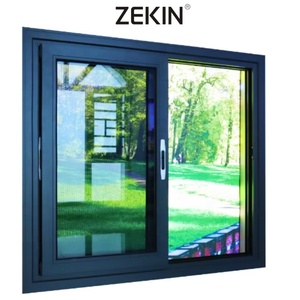
Customized Sliding Windows for Balcony Thermal Break Hurricane Proof
- Profile Gauge: 2.0 mm Virgin 6063-T6
- Glazing Setup: Double Tempered Low-E
- Air Permeability: Class 4 (EN 12207)
Manufactured in our 180,000 m² Foshan fabrication hub, every system below integrates virgin 6063-T6 architectural aluminium alloys, certified multi-chamber thermal breaks, and structural glazing designed to withstand alpine cold and seismic stress.
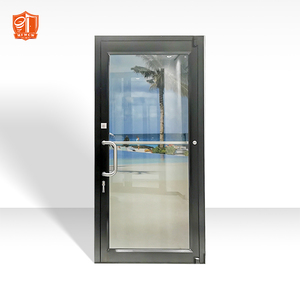
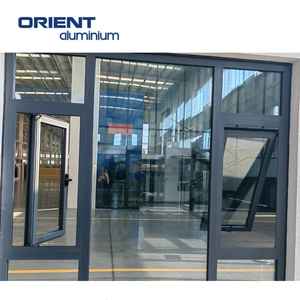
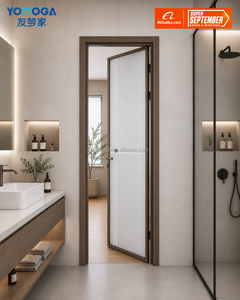
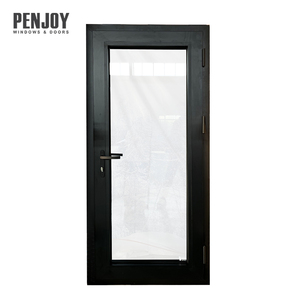
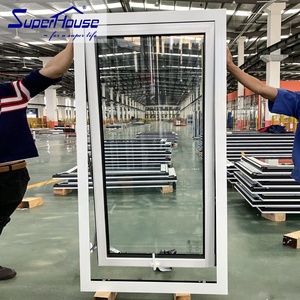
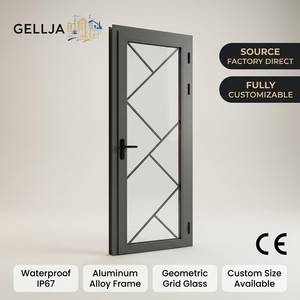
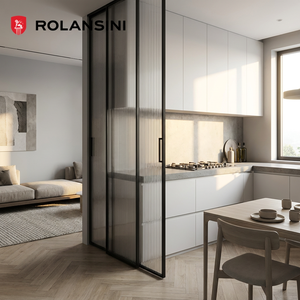
In modern fenestration engineering, delivering architectural glazing to the Kingdom of Bhutan demands a sophisticated approach. Bhutan's construction ecosystem is uniquely governed by the Bhutan Building Rules (BBR), the Bhutan Green Building Guidelines (BGBG), and stringent preservation mandates overseen by the Department of Culture and Dzongkha Development. Fenestration cannot simply function as a thermal boundary; it must honor centuries of cultural geometry while handling the punishing physical mechanics of the Eastern Himalayas.
Traditional Bhutanese architecture relies on Rabsel (cantilevered multi-timber window projections) and Payab (small vertical window openings). Our aluminum flush casement windows are engineered with precision coplanar outer sashes that lay 100% flat with the primary framing system. This eliminates the stepped visual bulk of standard residential casements and mirrors traditional joined timbers.
Urban settlements such as Thimphu (2,334m) and Paro (2,200m) endure severe winter temperature plunges, where heating loads skyrocket and interior condensation creates internal envelope mold. Our systems utilize 34mm Technoform polyamide reinforced thermal insulation bars, ensuring complete structural breaks between exterior cold alloy and interior air.
Bhutan is situated in Seismic Zone IV and V, crossed by active tectonic thrust planes. Additionally, high-altitude valleys experience severe diurnal mountain-valley thermal wind shears exceeding 140 km/h. DERCHI flush casement profiles integrate corner cast-iron internal corner braces with structural polyurethane injected crimping.
From the urbanizing corridors of the capital to remote Himalayan retreat centers, our aluminum flush casement windows provide the exact balance between structural performance and aesthetic reverence.
Private luxury residences and modern monastic administrative complexes in Paro Valley and Thimphu require windows that conform strictly with the Traditional Architecture Guidelines of Bhutan. Our wood-substitute flush casements pass municipal heritage board evaluations while halting cold air draughts.
International luxury travelers visiting Bhutan expect panoramic immersion into pristine valleys without acoustic disruption or chilly convective currents. Our flush casements integrate warm-edge triple glazing with solar-gain low-E coatings, ensuring guests stay warm without active carbon heaters.
As Bhutan builds the groundbreaking Gelephu Mindfulness City (GMC) Special Administrative Region, sustainable green building standards lead procurement. Our carbon-neutral production pathways and zero-VOC powder finishes qualify directly for high-tier green project tenders.
Unlike the temperate alpine elevations of the north, southern border towns face severe monsoon torrential rains and stifling subtropical heat. Our flush casements incorporate multi-tier cascade drainage pathways and pressure-equalized internal chambers that reject 100% of driving monsoon water.
Three critical structural forces are accelerating the pivot away from traditional timber frames and low-spec unplasticized PVC toward precision thermal-break aluminum in Bhutan.
Under Bhutan's constitutional mandate to maintain at least 60% forest cover for all generations, commercial timber logging is rigorously regulated. The Department of Forests and Park Services has tightened quotas on old-growth blue pine and mixed conifers, which traditionally supplied window frames. Builders are officially urged to adopt certified sustainable materials. Our engineered aluminum windows serve as the premier eco-friendly alternative, sparing virgin Himalayan forests while providing superior dimensional stability over decades.
The Ministry of Infrastructure and Transport (MoIT) is phasing in the BGBG across municipal Class-A Thromdes (Thimphu, Phuentsholing, Gelephu). Projects must demonstrate calculated thermal envelope performance. Uninsulated steel windows and unreinforced timber casements fail modern air-leakage and conductive thermal metrics. Developers are mandating certified factory test reports with tested SHGC and U-values to secure municipal construction clearances and occupancy certificates.
Bhutanese weather is characterized by radical moisture shifts: heavy June–September monsoons followed by exceptionally dry, sub-zero alpine winters. Natural timber windows swell, stick, crack, and rot within 5 to 7 seasons, requiring repeated painting and manual planing. DERCHI thermal-break aluminum flush casements possess a zero-moisture absorption coefficient, resisting UV degradation at high altitudes (2,500m+) without distortion or finish peeling.
| Performance Metrics | DERCHI Thermal Break Flush Casement | Traditional Blue Pine Timber Window | Standard Low-Cost uPVC Profile |
|---|---|---|---|
| Thermal Transmittance (Uw) | 1.1 – 1.4 W/(m²·K) (Certified) | 2.6 – 3.2 W/(m²·K) (Poor Seal) | 2.0 – 2.4 W/(m²·K) (Cavity Fill Dependent) |
| Dimensional Stability | Zero Warping / Zero Swell | Severe Swelling (Monsoon) & Splitting (Winter) | High Thermal Expansion (Becomes brittle in alpine cold) |
| Structural Wind Load (Pa) | 4500 Pa (Class E5 Himalayan Wind) | < 1500 Pa (Joint loosening over time) | 1800 Pa (Prone to deflection without steel cores) |
| Air Infiltration Rating | Class 4 (EN 12207 Highest Tightness) | Unclassified (Severe cold air leakage) | Class 2 to 3 (Gasket shrinkage in sub-zero) |
| Maintenance & Longevity | 50+ Years (Zero Periodic Repainting) | Requires varnishing every 2 years | Yellows & surface embrittlement after 8–10 years UV |
| Bhutan Heritage Code Compatibility | 100% Compliant (Coplanar Flush Design) | Authentic Original | Non-Compliant (Bulky stepped plastic frames) |
Headquartered in Foshan—the global epicentre of high-end aluminum extrusion and fenestration technology—Guangdong Dejiyoupin Doors and Windows Co., Ltd. (DERCHI) operates with over 25 years of engineering leadership, supplying prestigious projects across 100+ countries.
Equipped with intelligent CNC cutting centers, four-head automated corner crimping lines, and cleanroom glass tempering-argon injection chambers. Every window frame produced undergoes digital optical tolerance verification to achieve millimeter-perfect shop-drawing compliance.
Home and resort security in secluded Himalayan settings requires robust physical protection. Our globally patented Four-Side Six-Point locking invention distributes mushroom-head cam bolts across the perimeter, making sash prying physically impossible while pulling sashes completely tight into EPDM weather seals.
DERCHI systems are fully tested and certified under world-recognized standards: European CE (EN 14351), Australian AS2047, North American NFRC and CSA, along with ISO 9001 quality audits. Furthermore, our enterprise is officially certified as a "China Brand" by the world-class media authority Xinhua News Agency.
Comprehensive solutions to real-world procurement challenges faced by Bhutanese developers, architects, and government contractors.
Whether you are designing a high-altitude residential villa in Thimphu, an eco-luxury retreat in Bumthang, or a commercial development in Gelephu, connect directly with our engineering team for free structural reviews, U-value calculations, and competitive factory quotes.