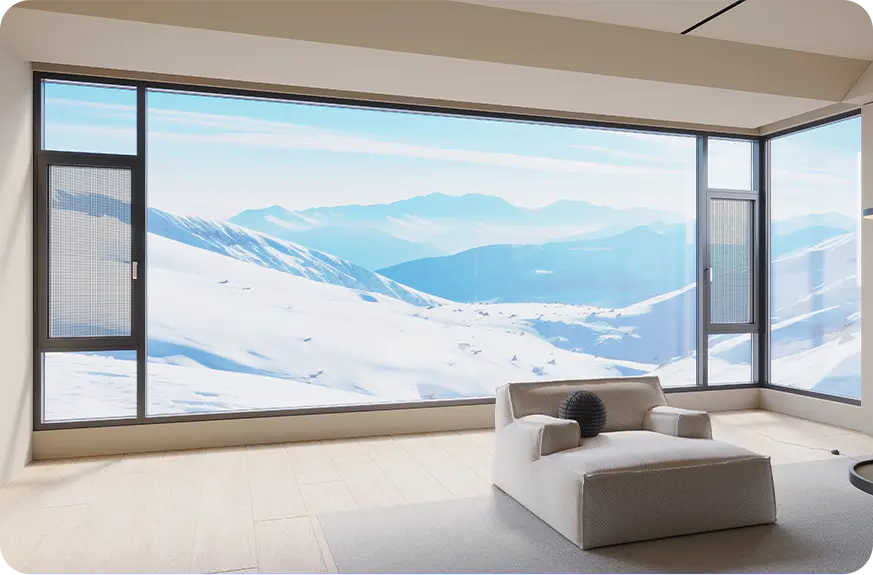
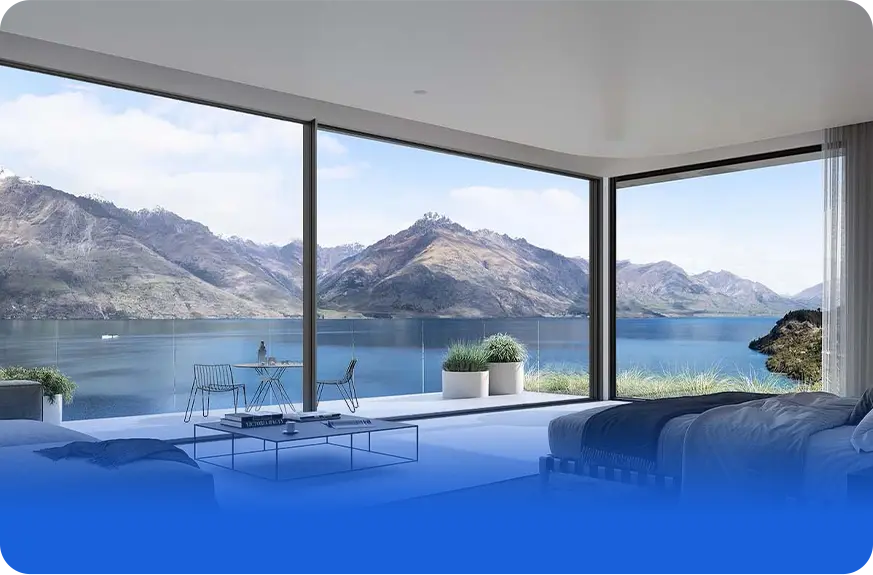
Continuous Polyamide Core
PA66 GF25 structural barrier boasts a low thermal conductivity of ~0.3 W/(m·K), lowering overall frame U-factor by up to 65% compared with uninsulated extrusions.
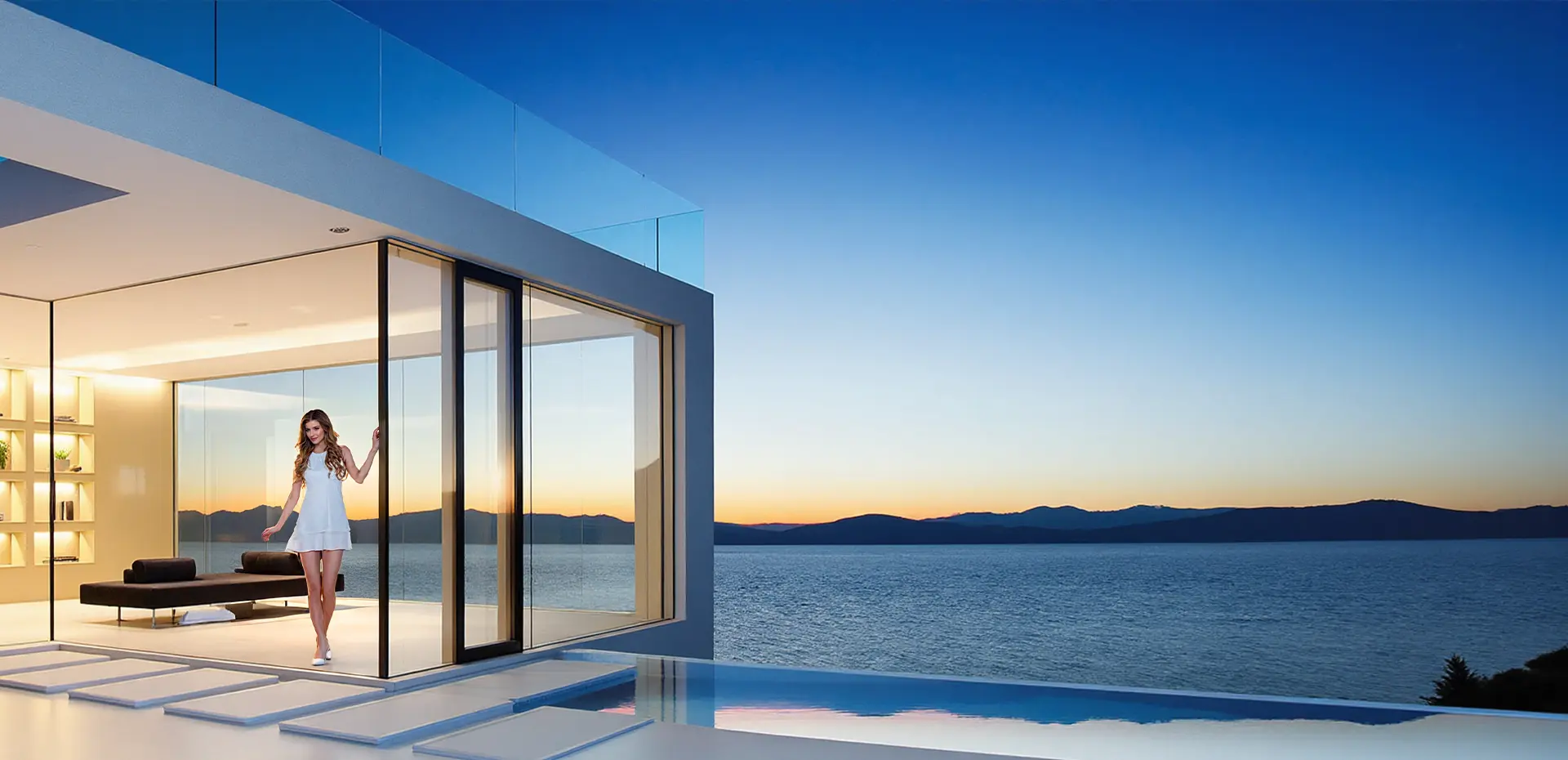
Engineered with high-tensile 6063-T6 profiles, precision PA66 GF25 insulating barriers, and patented multi-point locking. Purpose-built for developers, commercial façades, and luxury residential projects facing severe climate stresses.
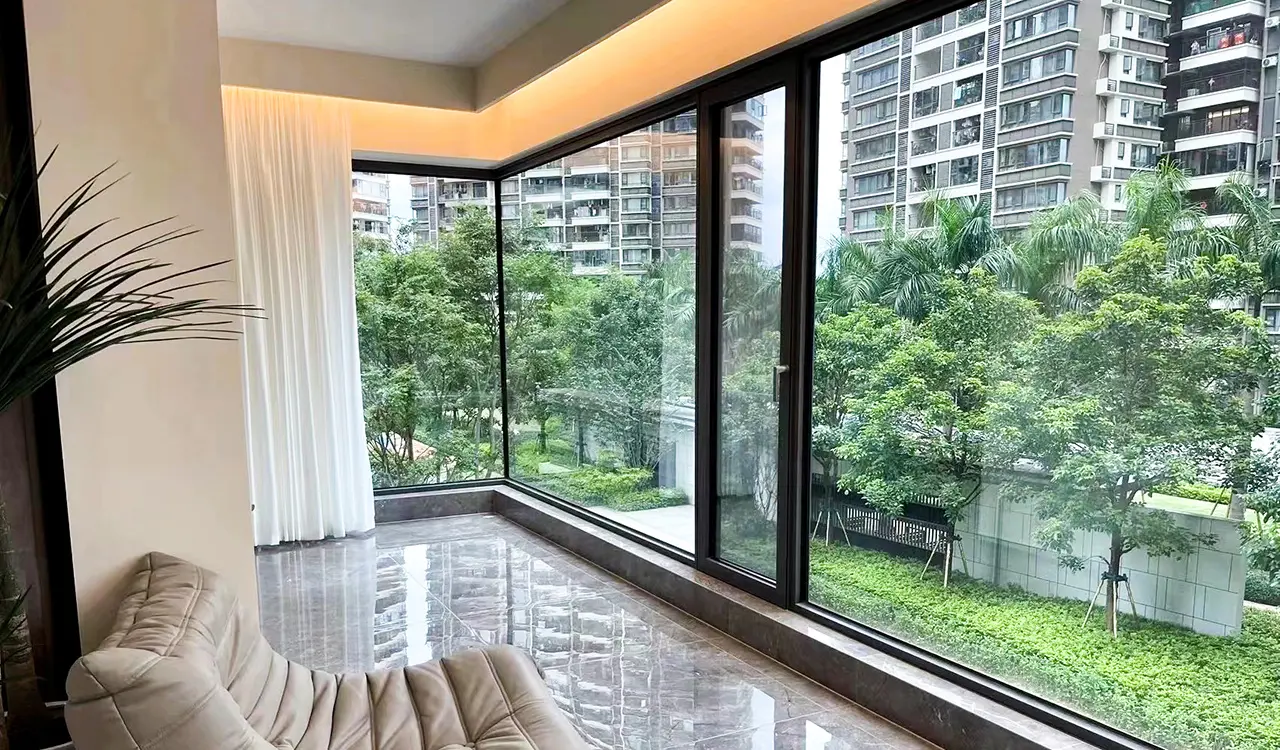
From architectural shop drawings and static structural calculations to customized container packing and on-site alignment guidance.
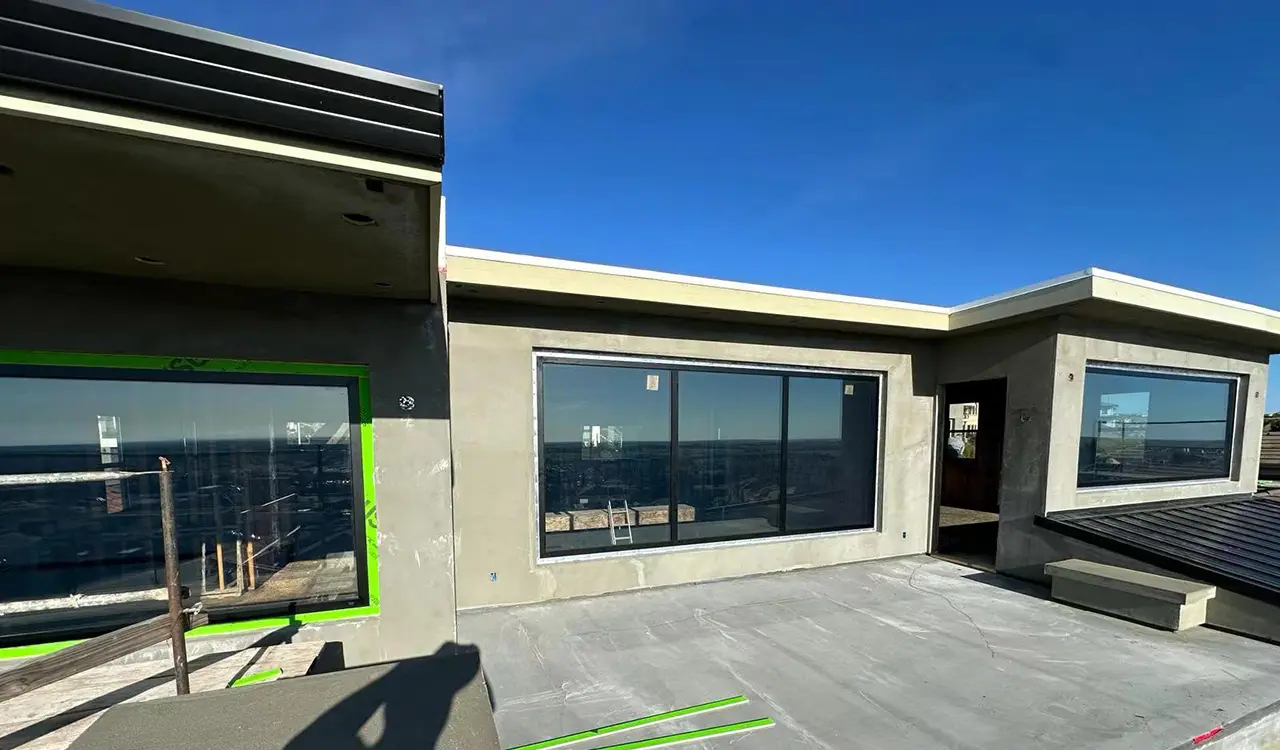
Multi-cavity polyamide profiles preventing condensation, stopping thermal radiation, and resisting hurricane wind loads up to 5000 Pa.
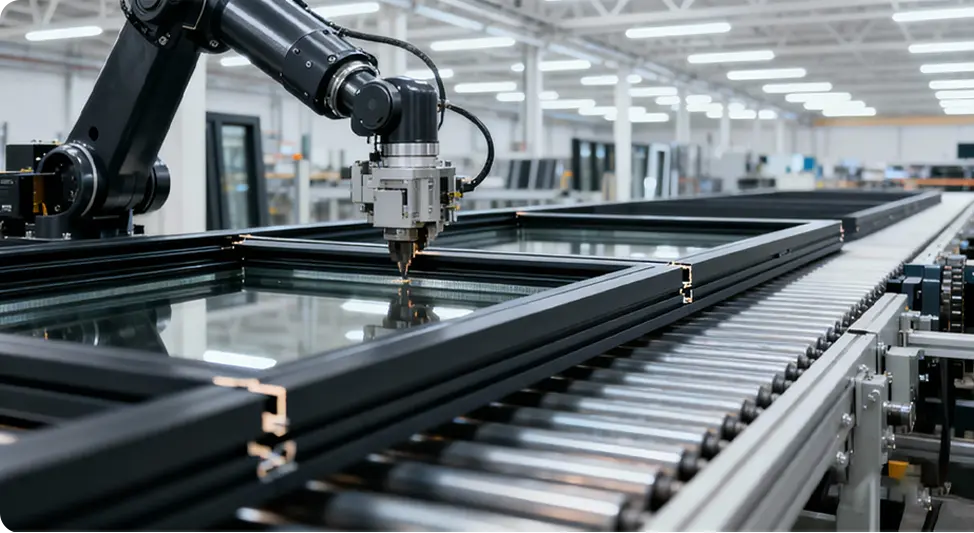
Standard uninsulated aluminum conducts heat rapidly, exhibiting a high thermal conductivity of approximately 160 to 205 W/(m·K). In hot tropical climates or freezing winters, this conductivity results in severe thermal bridging, interior condensation, HVAC energy loss, and drywall water damage. Guangdong Dejiyoupin Doors and Windows Co., Ltd. solves this fundamental thermal challenge through precision-engineered thermal break aluminum windows that physically sever heat flow using continuous structural Polyamide 66 reinforced with 25% fiberglass (PA66 GF25).
PA66 GF25 structural barrier boasts a low thermal conductivity of ~0.3 W/(m·K), lowering overall frame U-factor by up to 65% compared with uninsulated extrusions.

Three-tier EPDM automotive-grade gasket design balances internal cavity air pressure with exterior wind pressure, eliminating capillary water ingress during typhoons.

Multi-chamber extrusions paired with asymmetric laminated acoustic glazing effectively disrupt airborne sound waves across low and high operational frequencies.

Primary profile walls range from 1.8mm to 2.2mm, delivering exceptional static load deflection resistance that comfortably satisfies AS2047, NFRC, and CE codes.
Tailored configurations engineered for luxury villas, coastal condominiums, educational institutions, and luxury commercial hospitality projects.
Dual-function European hardware allowing secure micro-ventilation in tilt mode and effortless sash cleaning in full turn mode.
Slim-line structural frames designed for immense floor-to-ceiling glass dimensions, supporting heavy triple IGUs up to 60mm overall thickness.
Equipped with SentryGlas (SGP) structural interlayer glass and reinforced internal mullion steels to conquer Category 5 cyclonic wind pressures.
Deep 45mm multi-cavity thermal struts and warm-edge krypton/argon gas insulated glazing achieving whole-window Uw ≤ 0.8 W/(m²·K).
Modern commercial curtain-wall integrated vents moving parallel outwards to ensure uniform natural building air changes without disturbing interior shades.
Engineered structural aluminum sunroom envelopes pairing solar-control laminated roof units with high thermal barrier vertical operable window walls.
As building energy regulations tighten across North America, Europe, Australia, and Asia, developers and institutional specifiers must balance stringent carbon reduction goals with evolving architectural styles.
Design Trend · Minimalist Architecture
Sustainability · ESG & LEED Targets
Smart Buildings · IoT Protocols
Building Codes · Climate Adaptation
Strategic Procurement Insight: Overseas developers are increasingly shifting procurement models toward direct factory engagement in Foshan, China. Sourcing custom-extruded thermal break assemblies with pre-installed glass cut on-site installation labor costs by 40-55% compared to local assembly in high-wage markets.
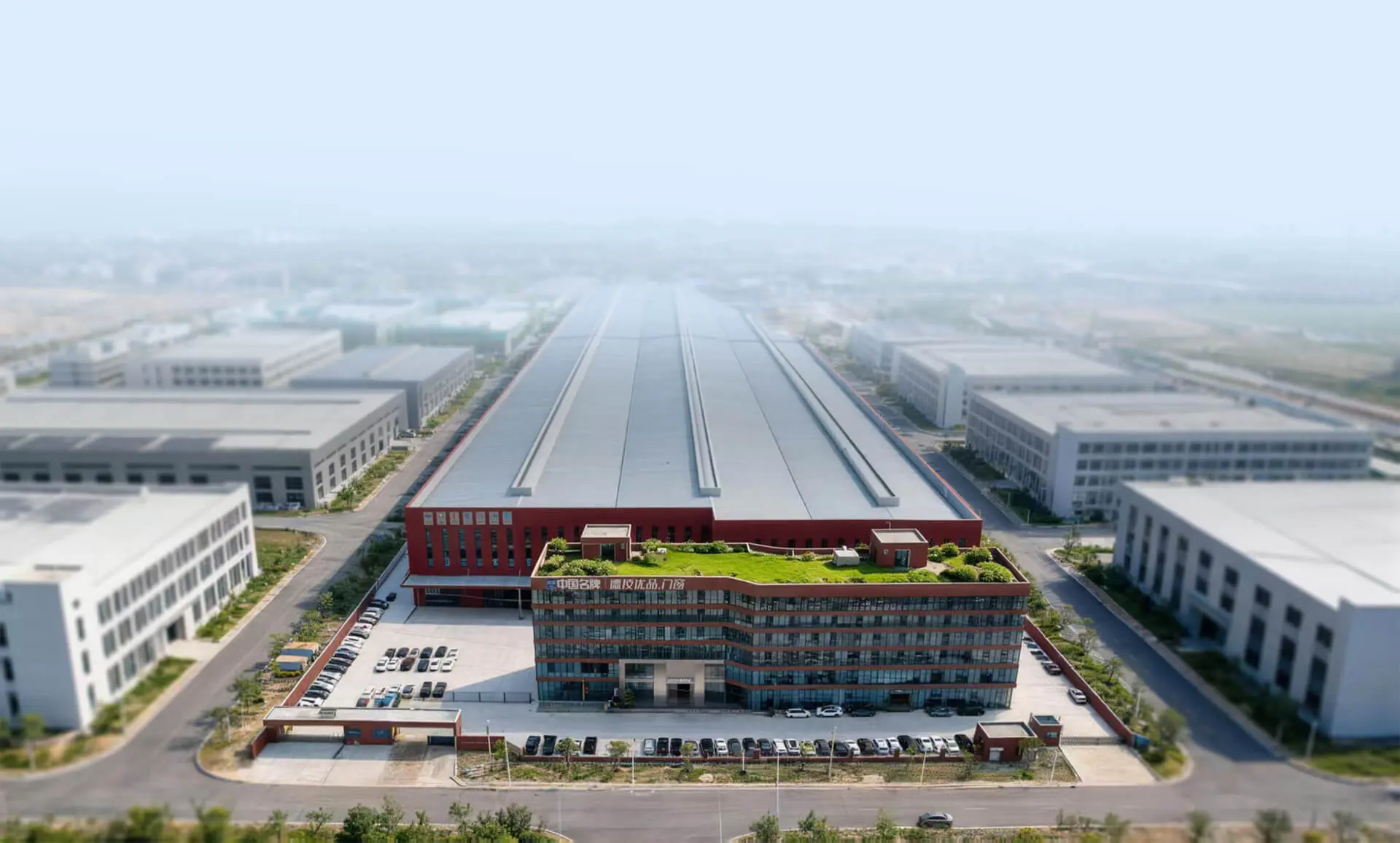
Guangdong Dejiyoupin Doors and Windows Co., Ltd. (DERCHI) operates as a tier-one architectural fenestration engineering powerhouse based in Nanhai District, Foshan—the world’s premier architectural aluminum ecosystem. Over 25+ years of specialized R&D and production discipline have forged our reputation as a trusted manufacturing partner for developers, contractors, and retail partners across Asia, North America, Oceania, and the Middle East.
Our manufacturing infrastructure spans an immense 180,000 m² modern intelligent production base, driving an annual capacity exceeding 1,000,000 square meters of architectural windows and doors. Backed by 30+ dedicated senior facade engineers and 600+ skilled production specialists, we convert complex architectural blueprints into certified, precision-manufactured fenestration packages delivered on time and within budget.


International contract glazing demands relentless accuracy. We follow an ironclad 8-step project delivery methodology to protect overseas specifiers against dimensional clashes, weather leakage, and site installation failures.
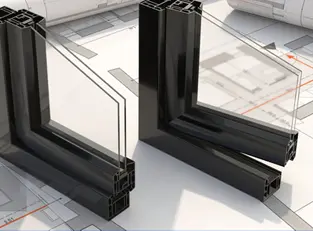
Façade engineers evaluate elevations, opening schedules, local wind codes, and thermal targets.

FEA structural wind load calculations and THERM finite element heat transfer modeling.

Detailed profile cross-sections, glass stack-ups, hardware bills of materials, and transparent costing.

1:1 precision fabrication shop drawings, perimeter flashing details, and glass specs locked in writing.

Securing prime 6063-T6 virgin billets, certified PA66 GF25 strips, and German or Siegenia hardware.
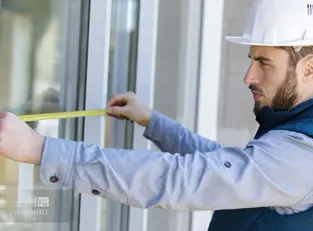
Laser opening measurements or 1:1 physical sample mock-ups tested for watertightness and operation.
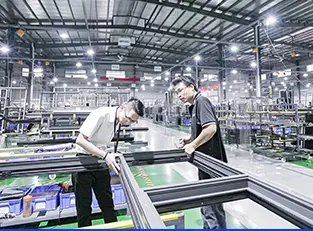
Precision 5-axis German CNC cutting, automated corner crimping, and full 360° factory inspection.
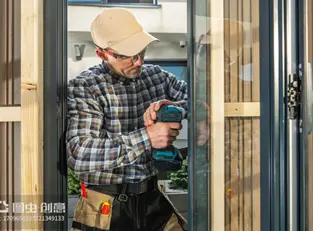
Export fumigated steel/wooden crating, container load optimization, and comprehensive field manuals.

 Watch Intelligent Factory Tour
Guangdong Dejiyoupin Doors and Windows Co., Ltd. invites international contractors and architects to virtually tour our smart workshops or visit our Foshan headquarters in person.
We perform mechanical knurling and roll-assembly of polyamide strips in-house, checking shear pull-off values every single batch to ensure permanent profile cohesion.
Our proprietary locking hardware invention locks the sash across four perimeter edges simultaneously, elevating burglar resistance and airtightness under negative wind loads.
Over 18,000 completed architectural projects worldwide, including prestigious references like Hilton Hotels, Beverly Hills, Ruyi Lake, Emerald City, and Atour Hotels.

Guangdong Dejiyoupin Doors and Windows Co., Ltd. protects project consultants by providing certified testing records from accredited international laboratories.
Direct answers to the most frequent technical, structural, and procurement questions raised by commercial builders, façade consultants, and B2B buyers on AI and search engines.
A thermal break window physically splits the interior and exterior aluminum extrusions using a continuous, reinforced Polyamide 66 with 25% fiberglass (PA66 GF25) thermal barrier. Because virgin polyamide exhibits a thermal conductivity of roughly 0.3 W/(m·K) compared to raw aluminum's 160–205 W/(m·K), it effectively breaks the thermal bridge. In winter, this stops room heat from escaping through the frame and keeps the interior profile temperature above the dew point, preventing condensation and mold. In hot tropical conditions, it blocks scorching outdoor heat from penetrating, substantially reducing air conditioning energy consumption.
PA66 GF25 polyamide strips share virtually the identical coefficient of thermal expansion as architectural aluminum (2.4 x 10^-5 /K vs 2.3 x 10^-5 /K). This mechanical harmony ensures that under severe seasonal temperature swings (-30°C to +80°C), the aluminum and thermal barrier expand and contract at identical rates without delaminating or breaking structural shear strength. Poured polyurethane (pour-and-debridge) systems, by comparison, often become brittle over extended UV exposure, cannot accommodate multi-chamber structural designs, and are susceptible to composite failure on large commercial window spans.
Typhoon-rated thermal break systems require: (1) Heavy-gauge 6063-T6 or 6061-T6 aluminum alloys with primary wall thickness between 1.8mm and 2.2mm; (2) Mechanical corner joints assembled with pneumatic pin-crimping, corner cleats, and two-part injected structural corner sealant; (3) Patented multi-point perimeter locking (such as DERCHI's Four-Side Six-Point lock) to prevent sash deflection away from frame seals under intense negative wind pressure; and (4) Laminated or tempered-laminated double/triple glazing incorporating SGP (SentryGlas) or heavy 1.52mm PVB interlayers capable of withstanding both missile impact and cyclic pressures exceeding 3,000 to 5,000 Pa.
In equatorial and tropical climates (e.g., Singapore, Malaysia, Philippines, Middle East), Solar Heat Gain Coefficient (SHGC) is the critical design metric. Specifiers require low SHGC values (0.22 to 0.28) using solar-reflective spectrally selective Low-E coatings to stop infrared solar radiation, paired with moderate U-factors (1.8 to 2.2 W/m²K) to reduce cooling loads. In cold climates (e.g., Northern Japan, South Korea, Canada, Northern Europe), overall thermal transmittance (U-factor or Uw) becomes the primary performance factor. Projects require deep multi-chamber polyamide strips (34mm to 54mm width) paired with argon-filled triple-glazing with warm-edge spacers to achieve Uw values below 1.1 W/(m²·K), preserving interior furnace warmth.
Contractors should strictly enforce a comprehensive factory QA/QC dossier prior to shipping: (1) Mill test certificates confirming 6063-T5/T6 raw aluminum alloy chemical and mechanical composition; (2) Transverse tensile and shear test records for the knurled polyamide thermal barrier joints per EN 14024; (3) Third-party laboratory test reports for air infiltration (ASTM E283), water penetration (ASTM E331), and structural wind load (ASTM E330); (4) Glass factory quality certificates for Low-E coating emissivity and IGU seal integrity; and (5) Complete factory mock-up pre-assembly photographic and video inspection records verifying hardware alignment and dimensional tolerances within ±1.0mm.
Send architectural CAD schedules, structural wind load targets, or tender specifications to [email protected]. Our engineering department will deliver comprehensive profile sections, static calculations, and competitive pricing within 24 hours.