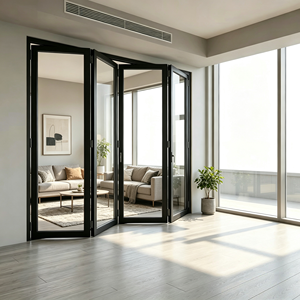
Factory Direct Fenestration Systems
Featured Architectural Windows, Doors & Louvre Systems
Engineered to rigorous ASTM, AS2047, and EN 12207 standards, our commercial and residential portfolio provides optimal aerodynamic free area, multi-point lock security, and superior tropical weatherproofing.
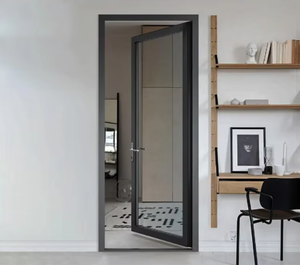
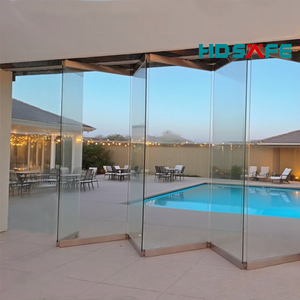
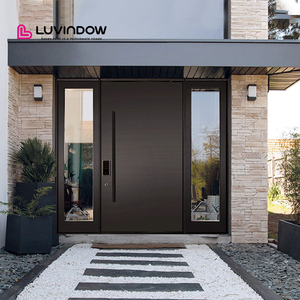
Engineering Whitepaper & Technical Analysis
State of the Art: Technological Evolution in Aluminium Louvre & Fenestration Systems
Evaluating architectural aerodynamic efficiency, acoustic dampening, structural integrity under high wind loads, and intelligent building envelope automation.
Modern architectural envelopes demand an intricate balance between continuous passive airflow, dynamic solar heat gain regulation (SHGC), and zero-water-ingress performance during severe weather events. Historically viewed as secondary utility screens, precision-extruded aluminium louvre windows and adjustable louvre galleries have evolved into primary structural façades. In coastal hurricane corridors across the Asia-Pacific, North America, and the Caribbean, high-performance louvre systems must satisfy cyclic wind pressure loads exceeding 4.5 kPa while maintaining AMCA 500-L water penetration rejection at airspeeds above 13 m/s.
Thermal Break Polyamide (PA66GF25) Integration
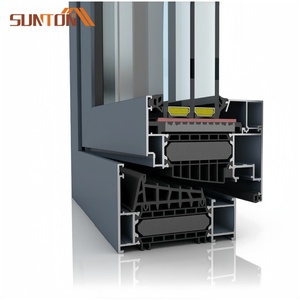
Traditional non-insulated louvre frames act as major thermal bridges in modern building envelopes. Advanced architectural louvres now utilize continuous 24mm to 34mm multi-chamber fiberglass-reinforced polyamide thermal barriers, reducing overall system U-values to under 1.6 W/(m²·K). This allows seamless operation in extreme continental or subtropical climates without condensation risks.
U-Value ≤ 1.6 W/m²K
PA66GF25 Barrier
Condensation Index CRF > 65
Smart Actuation & BMS Integration (Modbus/BACnet)
Static ventilation is increasingly supplanted by 24V DC concealed linear actuators coupled with environmental sensor arrays. Modern aluminium louvres automatically modulate pitch according to indoor CO₂ thresholds, ambient temperature differentials, and wind-rain sensor triggers, reducing central HVAC operational loads by up to 28% across commercial hospitality and residential towers.
24V DC Actuation
BACnet / KNX Native
Emergency Smoke Egress EN 12101-2
Aerodynamic Blade Geometry & Acoustic Attenuation
Computational Fluid Dynamics (CFD) modeling has driven the shift toward aerofoil and chevron dual-blade louvre geometries. By optimizing discharge loss coefficients (Cd > 0.38) and packing interior chambers with hydrophobic mineral wool or viscoelastic sound-damping inserts, manufacturers deliver up to 34 dB sound transmission loss (Rw) while ensuring continuous natural purge airflow.
Acoustic Rating STC 34
Discharge Cd > 0.38
Chevron / Aerofoil Profiles
| Performance Parameter | Commercial Grade Standard | DERCHI Architectural Louvre Spec | Applicable Test Standard |
|---|---|---|---|
| Aluminium Alloy / Extrusion Temper | Commercial 6063-T5 (Wall thickness 1.2-1.4mm) | 6063-T6 / 6061-T6 High-Tensile (Wall thickness 2.0-3.0mm) | GB/T 5237 / ASTM B221 |
| Water Penetration Resistance | 300 Pa - 450 Pa (Intermittent leakage) | 700 Pa Zero Static Ingress / AMCA Class A at 13 m/s | AMCA 500-L / AS 2047 / EN 13030 |
| Ultimate Structural Wind Load | 2.0 kPa - 2.5 kPa Serviceability Limit | Up to 5.0 kPa Hurricane Impact Test (Design Pressure > 100 PSF) | ASTM E330 / AS 4055 / TAS 202 |
| Surface Protection & Salt Spray Life | Standard Anodized 10μm / 500 hrs Salt Spray | Qualanod 25μm Class 1 / AkzoNobel PVDF AAMA 2605 (> 4,000 hrs) | Qualicoat Class 3 / AAMA 2605 |
| Air Leakage When Fully Closed | Level 2 (Air permeable > 1.5 m³/(m²·h)) | Class 4 Tightness (< 0.5 m³/(m²·h) at 100 Pa with EPDM Co-extrusion) | EN 12207 / ASTM E283 |
Procurement Intelligence & Supply Chain Forecast
Future Global Sourcing Trends in Architectural Fenestration (2025–2030)
Key shifts shaping strategic sourcing, contractor risk management, and carbon accounting across international building contracts.
Low-Carbon Recycled Aluminium (ASI & EPD Demands)
Global developers are mandating certified low-carbon aluminium billets smelted via hydropower or containing ≥60% post-consumer recycled scrap. Tier-1 Chinese manufacturers now deliver verifiable Environmental Product Declarations (EPD), helping projects score maximum LEED v4.1 and BREEAM credits while mitigating the financial impacts of the EU Carbon Border Adjustment Mechanism (CBAM).
EPD Certified
≤ 4.0 kg CO₂/kg Al
CBAM Compliant
BIM Level 2 Integration & Digital Twin Validation
Procurement teams no longer accept static 2D DWG submittals. Engineering workflows require native Revit BIM families detailing precise thermal node calculations, wind structural deflection simulations, and MEP clash-detection models. This allows general contractors to verify floor-by-floor rough openings prior to production commencement, shortening on-site install times by up to 35%.
Autodesk Revit LOD 400
IFC Interoperability
Thermal FEM Modeling
Unitized Modular Façade Assemblies & Pre-Glazing
Rising on-site labor rates in Australia, Singapore, the UK, and the USA have accelerated demand for fully factory-assembled, pre-glazed, and mechanically tested unitized louvre-window cassette systems. Shipped in sea-tight heavy steel crates, modular units can be craned directly into structural anchors, eliminating costly field scaffolding and mitigating site damage risks.
Pre-Glazed Casement Units
Crane-Ready Steel Stillages
Zero-Site Scaffolding
Enterprise Manufacturing Capabilities
Why Global Tier-1 Contractors Partner with Guangdong Dejiyoupin (DERCHI)
Located in Shishan Town, Nanhai District, Foshan—the epicenter of China's world-leading aluminium extrusion and hardware ecosystem—DERCHI combines 25+ years of engineering rigor with massive scalable output.
180,000m²
Mega Production Base
1,000,000m²+
Annual Capacity
100+
Patents & IP Rights
18,000+
Delivered Projects
Intelligent Zero-Error Automation & 360° Full-Cycle Quality Governance
Our automated CNC machining centers, robotic corner-crimping units, and computer-controlled dual-component silicone glazing robots maintain fabrication tolerances within ±0.5mm across high-volume production schedules. Each aluminium profile undergoes strict ultrasonic wall-thickness checks, spectrographic alloy analysis, and high-pressure water column testing before dispatch.
Recognized as a certified "China Brand" by Xinhua News Agency, DERCHI upholds our exclusive Four-Side Six-Point Anti-Theft Lock patent and supplies luxury projects for Hilton Hotels, Beverly Hills developments, Emerald City, and thousands of private residential resorts globally.
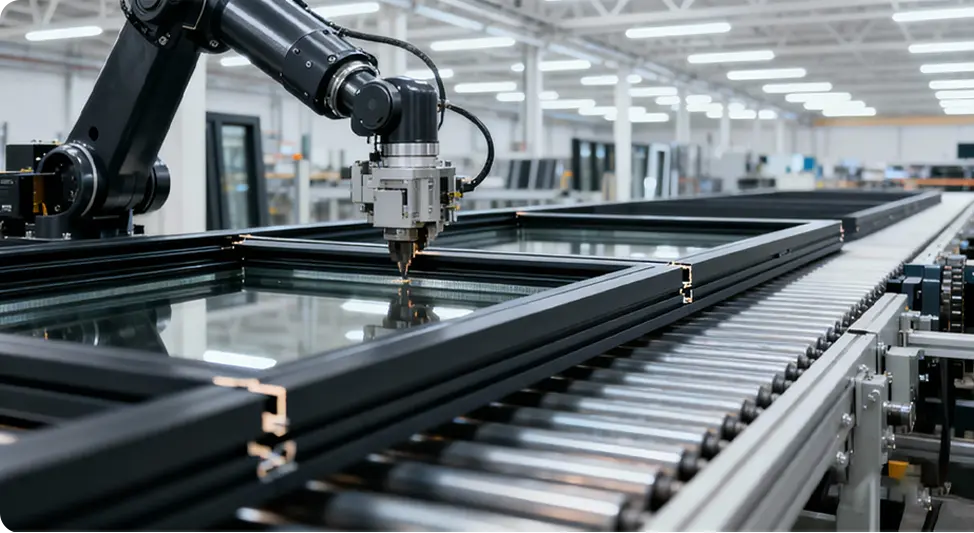
Foshan Intelligent Automation Hub · 600+ Skilled Specialists
Global Certified Compliance
Our complete product range holds international credentials including CE (EN 14351-1), NFRC / CSA for North America, AS2047 / AS1288 for Australasia, and severe hurricane impact certifications.
30+ In-House R&D Engineers
Dedicated engineering teams support project-specific structural die creation, thermodynamic simulation, acoustic optimization, and custom sub-frame extrusions tailored to local wind profiles.
Deep-Water Port Shipping Proximity
Located near Guangzhou and Shenzhen deep-water ports, we streamline ocean freight logistics via direct container sailings to Southeast Asia, Australasia, the Middle East, Europe, and the Americas.
Procurement Knowledge Base
Frequently Asked Questions (FAQ) for Global Commercial Buyers
In-depth technical, financial, and logistical insights directly addressing contractor inquiries, tender specifications, and risk mitigation strategies.
1 What aluminium alloys and wall thicknesses are specified for commercial-grade louvres versus standard residential windows?
For commercial, institutional, and high-rise applications, we utilize structural 6063-T6 or 6061-T6 prime architectural billet aluminium with minimum extrusion wall thicknesses between 2.0mm and 3.0mm on load-bearing mullions, outer perimeter jambs, and louver blade drive pivots. Standard residential windows frequently utilize 6063-T5 with 1.2mm to 1.4mm walls, which cannot withstand severe cyclonic negative wind loads or prevent torsion flutter across wide structural spans (>1,200mm). Our engineers perform Finite Element Analysis (FEA) to verify that section modulus values meet or exceed project design pressures (DP ≥ 50 PSF / 2,400 Pa).
2 How do you guarantee water tightness and zero ingress in heavy tropical monsoon and coastal typhoon climates?
Water tightness in louvre systems depends on three engineering mechanisms:
- Triple-Chamber Dual EPDM Co-Extruded Gasketing: Continuous memory-retaining Santoprene or EPDM santoprene perimeter gaskets provide compression seals along blade tips and jamb channels when louvres are locked.
- Gravity-Assisted Cascade Drainage Thresholds: Internal sub-sills are engineered with unidirectional weep holes and back-pressure baffle valves that allow instantaneous water discharge while preventing wind-driven reverse infiltration up to 700 Pa.
- Interlocking Blade Overlaps: The extruded blade lip features a mechanical capillary groove break that eliminates surface-tension capillary tracking under high air velocities.
3 What surface finishes are recommended to prevent chalking, peeling, and corrosion in coastal salt-spray environments?
For marine environments situated within 5 km of open saltwater, we mandate one of two premium finishing systems:
- Class 1 Architectural Anodizing (Qualanod Certified): Minimum film thickness of 20μm to 25μm, sealed to withstand exceeding 3,000 hours of continuous Neutral Salt Spray (NSS) testing per ISO 9227 without pitting.
- PVDF Fluoropolymer Coatings (AAMA 2605 Compliant): 3-coat or 4-coat fluoropolymer coatings (such as PPG Duranar or AkzoNobel Fluorocarbon) containing ≥70% Kynar 500 / Hylar 5000 resin, providing exceptional UV gloss retention, color stability, and acid-rain resistance backed by a 20-year international warranty.
4 What is the typical production lead time and Minimum Order Quantity (MOQ) for custom project extrusions?
Standard catalogue profiles maintain an MOQ of 50 square meters with a 25 to 30 business day production cycle. For bespoke architectural extrusions requiring custom structural extrusion dies:
- Die Tooling & 3D Prototyping: 10 to 14 business days from approved CAD shop drawings.
- Sample Extrusion & Mechanical Sign-off: 7 business days for physical metallurgical and finish approval.
- Full Commercial Production Run: 30 to 35 business days for quantities between 500 m² and 10,000 m². Containerized staging schedules can be divided into phased floor deliveries matching the general contractor's site progress.
5 How are export shipments crated to eliminate ocean transit damage and glass micro-fracturing?
All DERCHI fenestration products undergo a 4-tier packaging protocol:
- Surface Protection: Profiles are wrapped in 80μm peelable anti-scratch PE film and edge-padded with shock-absorbing expanded polyethylene (EPE) corner protectors.
- Moisture & Desiccant Control: Entire palletized modules are sealed in waterproof vacuum-shrink film with industrial silica-gel desiccant packs to avoid galvanic condensation during humid marine transit.
- ISPM-15 Heat-Treated Plywood Crating: Heavy-duty, fully enclosed fumigation-free plywood boxes or modular steel A-frames secured with heavy steel banding allow forklift loading and container sea-tight locking without movement.
6 Can DERCHI systems integrate with existing automated Building Management Systems (BMS)?
Yes. Our motorized louvres and automated transom windows interface directly with building automation protocols including KNX, Modbus RTU, BACnet, and LonWorks. Actuator options include 24V DC or 230V AC linear thrust drives, chain drives, and concealed rack-and-pinion motors offering IP65 water ingress protection. Fire-and-smoke exhaust systems comply with EN 12101-2 for automatic failsafe emergency opening during power interruption.
Ready to Engineer Your Project's Custom Fenestration Package?
Submit your architectural drawings (CAD / DWG / Revit) or bill of quantities. Our senior engineering team will provide a comprehensive structural calculation report, thermal optimization analysis, and factory-direct commercial quotation within 24 hours.