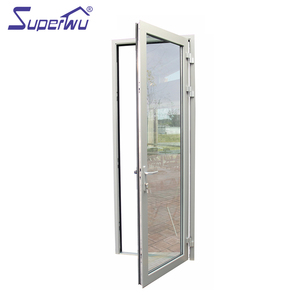
Aluminum Doors and Windows Suppliers Energy Saving Modern Designs Mobile Home Entry Doors French Doors Interior Swing Finished
Thermal Break
Get a Quote
Precision-manufactured with primary aluminium alloys, high-performance polyamide thermal breaks, and laminated architectural glass to withstand rigorous environmental loads.
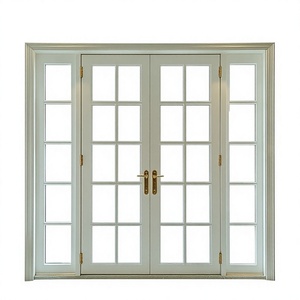
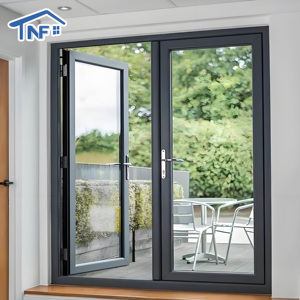
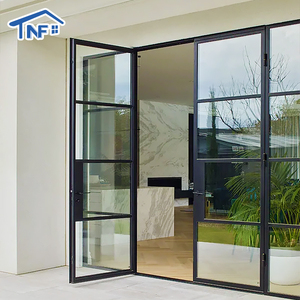
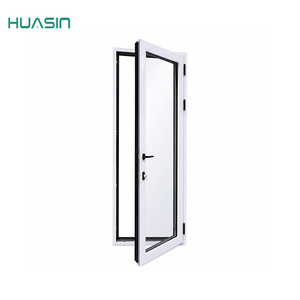
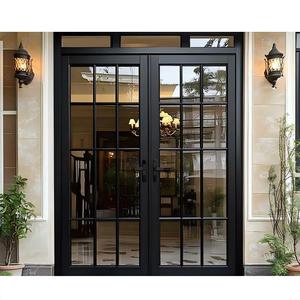
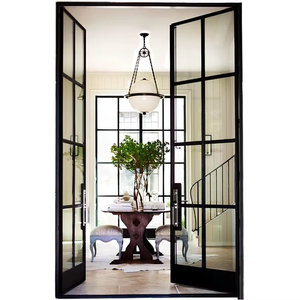
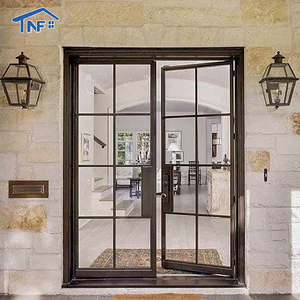
Navigating the global supply chain requires looking beyond superficial aesthetics. Sourcing managers, façade engineers, and property developers must audit factories across four critical engineering dimensions.
Top-tier facilities utilize prime 6063-T5 or 6063-T6 virgin aluminium billet rather than recycled scrap metal. This preserves tensile yield strength (minimum 160 MPa), prevents structural micro-cracking, and guarantees surface smoothness essential for high-micron powder coating or anodization.
Standard non-thermal aluminium conducts heat rapidly (U-factor > 5.0 W/m²K). Leading manufacturers engineer polyamide (PA66 GF25) techno-polymer thermal breaks, reducing U-values to under 1.6 W/m²K to eliminate internal condensation and meet strict ASHRAE and Title 24 standards.
Modern 4-axis and 5-axis CNC machining centers yield miter-joint and hardware prep tolerances within ±0.2 mm. Mechanical corner keys combined with dual-component structural injection glue ensure permanent frame squareness under cycling wind loads.
| Performance Dimension | Tier-1 Integrated Manufacturer | Standard Commercial Fabricator | Architectural Verification Protocol |
|---|---|---|---|
| Aluminium Alloy Quality | Primary 6063-T5/T6 billet; wall thickness ≥ 2.0 mm | Mixed/re-melted scrap; variable wall 1.2–1.4 mm | Spectrometric chemical analysis & tensile testing |
| Thermal Break Technology | PA66 GF25 Polyamide strut with multi-cavity design | PVC inserts or resin-pour/debridge (unreinforced) | Thermal imaging & longitudinal shear resistance test |
| Sealing & Weatherproofing | Continuous EPDM co-extruded foam gaskets; vulcanized corners | Discontinuous PVC/TPE seals with butt joints | ASTM E283 air infiltration & ASTM E331 water penetration |
| Locking & Burglary Resistance | Multipoint system (e.g. 6-point perimeter lock) | Single latch or two-point standard locking | EN 1627 RC2/RC3 forced entry test protocols |
| Glazing Integration | Dual/Triple IGUs with Warm-Edge spacers & Argon fill | Clear dual tempered glass with standard aluminium spacer | IGCC/CGSB certified dew-point & UV radiation test |
Featuring our proprietary Four-Side Six-Point Lock invention patent, providing unmatched resistance against forced entry and structural racking in high-velocity hurricane zones.
Fully compliant with international performance standards: CE (Europe), NFRC & Energy Star (USA), AS2047 (Australia), CSA (Canada), and ISO 9001 quality management benchmarks.
Equipped with 360° total quality management and automated German CNC fabrication equipment, maintaining strict tolerances from initial shop drawings to finished assemblies.
Forward-looking architectural trends are reshaping fenestration specifications over the next decade. Commercial and residential developers must adapt their procurement checklists accordingly.
Environmental Product Declarations (EPDs) are shifting from optional credentials to mandatory project criteria. Suppliers utilizing renewable-energy-smelted aluminium (low-carbon aluminium with < 4.0 kg CO₂/kg Al) are winning institutional developer contracts in Europe and North America.
Modern entrance doors increasingly integrate motorized concealed multipoint locking, RFID/biometric readers, and BACnet/KNX building management protocols. Concealed electric wiring channels through the profile frames are replacing external retrofits.
Architects demand interlocking stile sightlines as thin as 20–30 mm while expanding leaf heights past 3.5 meters. This trend requires ultra-rigid structural profiles with integrated steel reinforcements to handle extreme dynamic wind pressure.
Critical engineering, logistics, and compliance inquiries answered for overseas developers, general contractors, and sourcing agents.
Engineering compliance requires matching certified Design Pressure (DP) ratings to your local building jurisdiction. For coastal zones subject to tropical cyclones or hurricanes, factories must provide physical test reports conforming to ASTM E1886/E1996 (missile impact), TAS 201/202/203, or AS2047. Ensure the door sashes incorporate structural interior stiffeners, structural silicone glazing (SSG), and laminated glass with PVB or SentryGlas (SGP) interlayers.
Frame condensation occurs when profile surface temperatures fall below the indoor dew point. This is mitigated through thermally broken profiles containing minimum 24 mm to 34 mm glass-fiber reinforced polyamide (PA66 GF25) barrier strips. Paired with double or triple insulated glass units (IGUs) filled with argon gas and warm-edge silicone composite spacers, the Condensation Resistance Factor (CRF) is elevated above 65, stopping moisture accumulation in both humid Singapore summers and frigid Canadian winters.
A Tier-1 manufacturer operates an 8-step QA/QC lifecycle: 1. Raw billet chemical composition checks; 2. Profile extrusion dimensional inspection; 3. Powder coating thickness (minimum 60–80 microns per Qualicoat standards); 4. CNC hardware milling accuracy verification; 5. Mockup trial assembly of 100% of custom configurations; 6. Water infiltration pressure testing on random batch units; 7. Multi-layer shockproof corner packaging and solid timber crating; 8. Container loading balance analysis.
Yes. Professional OEM/ODM manufacturers maintain dedicated in-house technical engineering departments (e.g., our team of 30+ R&D structural engineers) that ingest Revit, AutoCAD, and IFC models. We translate conceptual schematics into precise fabrication shop drawings detailing profile wall thickness, glass specs, drainage weep hole locations, perimeter anchoring, and structural sub-sills prior to cutting any metal.
Submit your door schedules, CAD shop drawings, or wind load requirements for an immediate factory-direct analysis.